Table of Contents
- Why Researchers Look for a Pure Peptides Australia Alternative
- What to Check Before Switching Peptide Suppliers
- Peptide Supplier Purity Testing: HPLC-MS and Batch Verification
- Peptide Batch Certificates of Analysis: Read Before You Buy
- Local Peptide Supplier Shipping and Storage
- Regulatory Status and Research-Use-Only Labelling
- Comparing Popular Compounds: BPC-157 and TB-500
- Frequently Asked Questions
Last Updated: October 16, 2026
Why Researchers Look for a Pure Peptides Australia Alternative
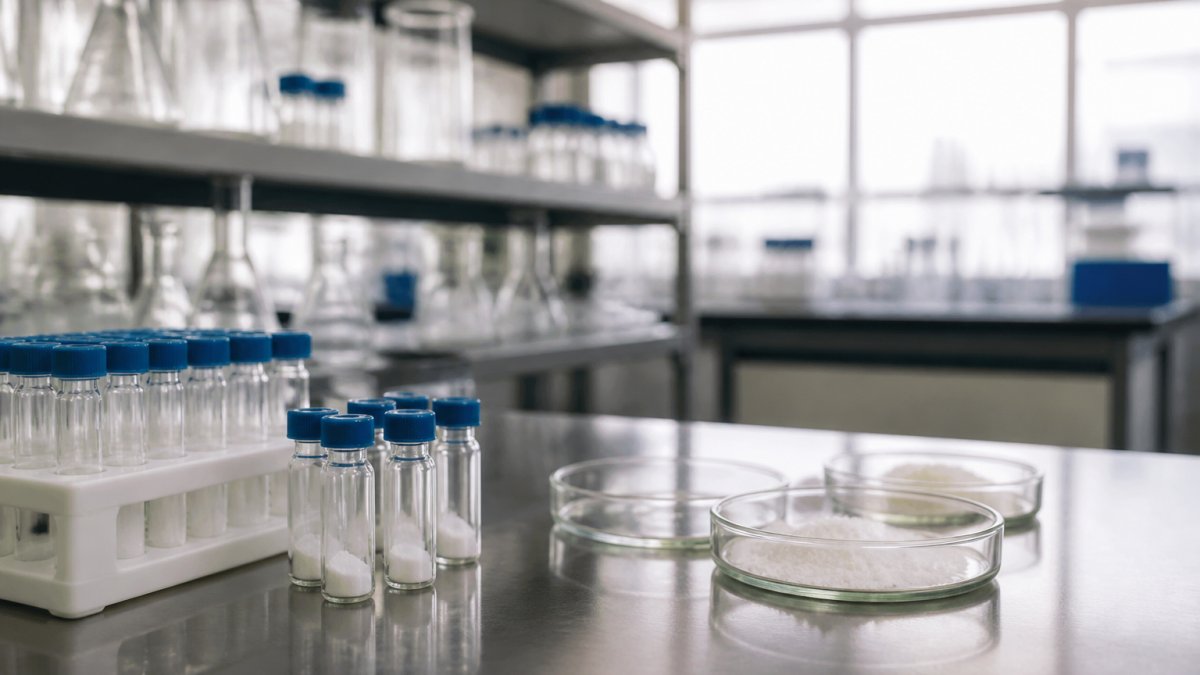
A pure peptides Australia alternative matters most to laboratories that need a verified, traceable supply chain without waiting on international freight.
That frustration drives most supplier searches. A pure peptides Australia alternative is not simply a cheaper vendor.
The stakes are practical, not theoretical. In-vitro work depends on knowing exactly what you are adding to a culture.
Below, we break down what to check before switching, how testing works, and how to read the paperwork that separates a serious supplier from a marketing page.
What to Check Before Switching Peptide Suppliers
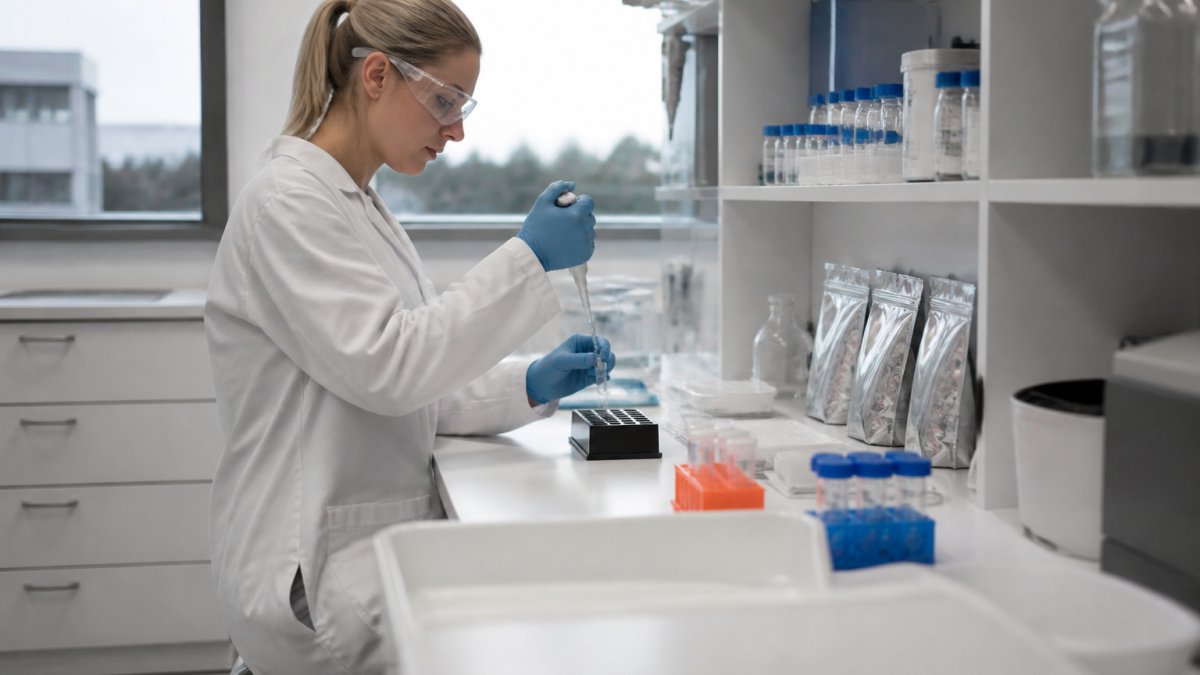
Switching suppliers is a validation exercise, not a shopping decision. Before you move, confirm four things: identity testing, batch traceability, dispatch reliability, and documented storage conditions.
Most research groups underestimate the revalidation cost. A new supplier means new baseline checks, and that takes bench time. The question is whether the new supplier removes more risk than it introduces.
Red Flags in Supplier Marketing
Vague purity claims top the list. "Pharmaceutical grade" or "lab tested" without a named method tells you nothing about how identity was confirmed.
Other warning signs we see researchers flag:
- No batch number on the vial or the paperwork
- Certificates that list a percentage but not the analytical method
- Test results with no laboratory name or accreditation
A legitimate supplier answers documentation questions before payment. If a vendor deflects, treat that as your answer.
Peptide Supplier Purity Testing: HPLC-MS and Batch Verification
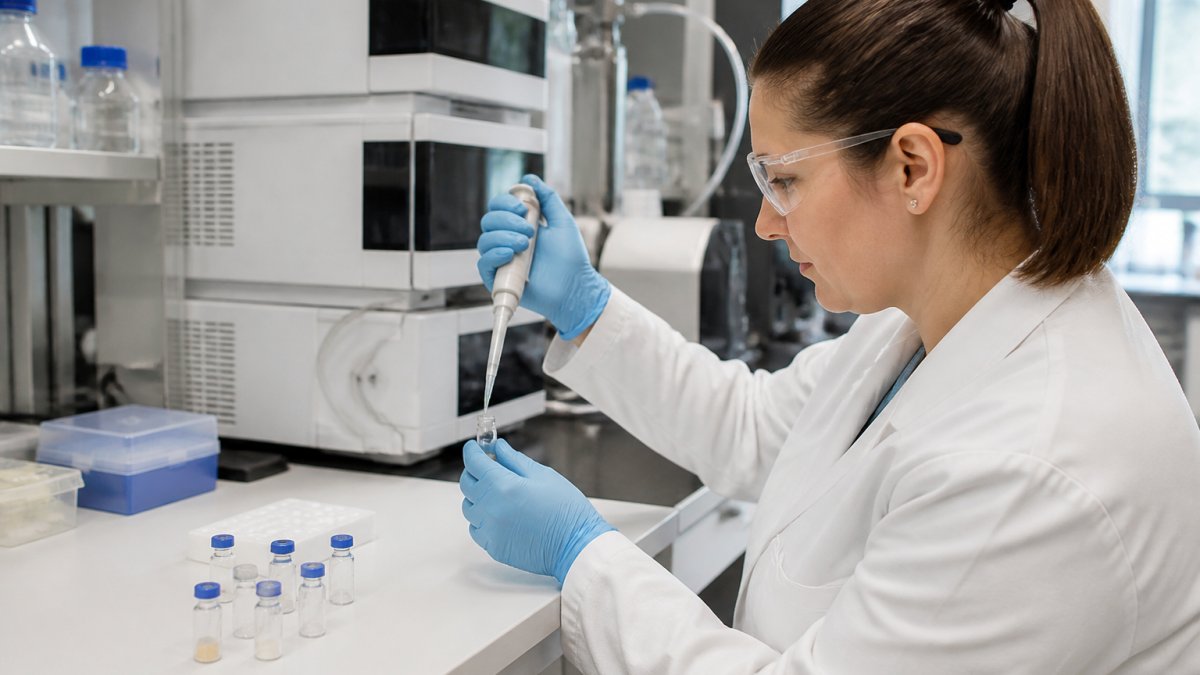
Peptide supplier purity testing should combine two methods, not one. HPLC separates the components in a sample and reports how much of it is the target compound. Mass spectrometry confirms the molecular identity, proving the peak is actually the peptide you ordered.
Used together, HPLC-MS catches problems that either method alone would miss. A sample can be 99% pure by HPLC and still be the wrong molecule entirely.
What Independent Testing Adds
In-house results are a starting point, not proof. When a third-party laboratory runs the analysis, the result does not depend on the seller's own equipment or incentives.
For research that will be published or audited, independent verification is the difference between a defensible record and an assertion.
OptiPeps holds every batch to a 99%+ HPLC-MS verified purity standard before dispatch, with results published at batch level so researchers can trace exactly what they received.
Peptide Batch Certificates of Analysis: Read Before You Buy
A certificate of analysis is the document that ties a specific batch to its test results.
If any of those fields is missing, the certificate is decoration.
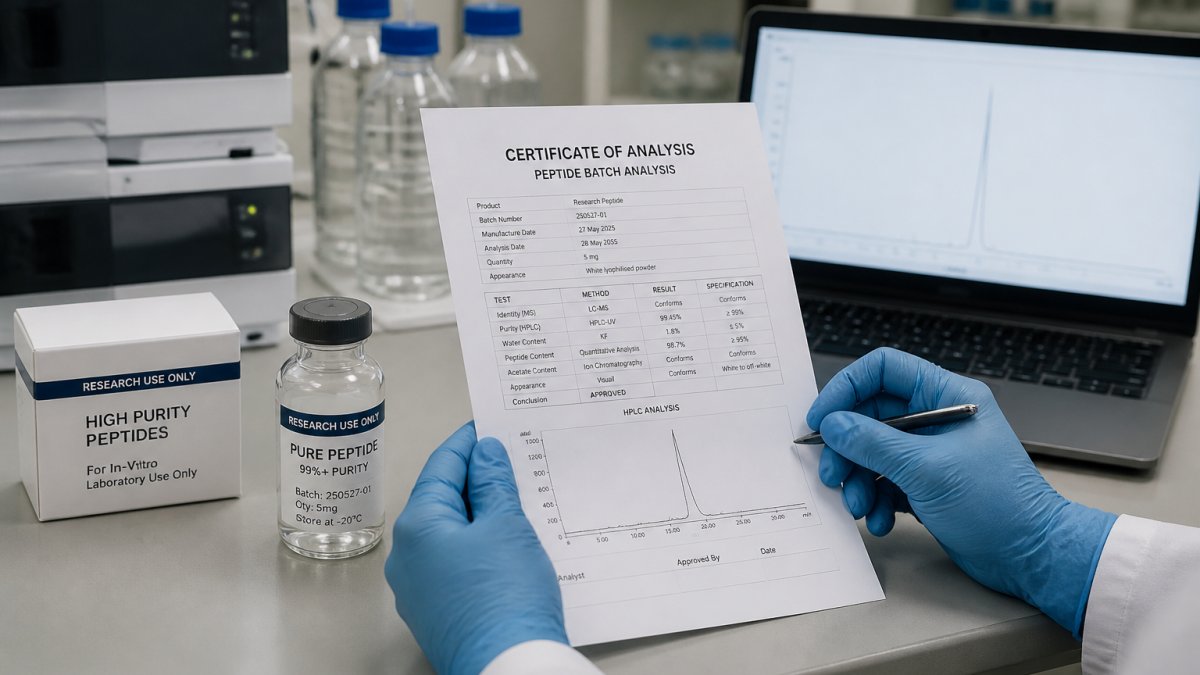
Read it in this order:
- Match the batch number on the certificate to the number on your vial.
- Check the method listed. HPLC-MS is what you want to see.
- Confirm the laboratory name and whether it is independent of the seller.
- Compare the test date to your order date. Old results may not describe your batch.
- Look for the storage statement, which tells you how the compound should be held.
Local Peptide Supplier Shipping and Storage
Local peptide supplier shipping changes the risk profile of an order.
International orders can sit in a facility for weeks. For temperature-sensitive research materials, that is an unmeasured variable in your experiment.
OptiPeps dispatches same-day from a facility in Melbourne, with stock held domestically and delivery through Australia Post Express.
Storage matters just as much after arrival. Confirm the recommended conditions with your supplier and record them alongside the batch number.
| Checkpoint | What to Confirm | Why It Matters |
|---|---|---|
| Dispatch origin | Domestic facility, same-day | Avoids customs delays |
| Carrier | Tracked express service | Limits transit time |
| Packaging | Sealed, labelled with batch | Protects traceability |
| Storage guidance | Documented per compound | Preserves integrity |
| Delivery threshold | Free express over $100 | Predictable budgeting |
Regulatory Status and Research-Use-Only Labelling
Research peptides are sold for laboratory use, not for human use. That distinction is not a formality, and it is where most supplier pages get vague. In Australia, therapeutic goods are regulated under the Therapeutic Goods Act 1989 and administered by the Therapeutic Goods Administration (TGA). Understanding how a product is classified tells you what a supplier is legally allowed to claim, and what they are quietly avoiding.
The classification pathways that matter
Australian therapeutic goods generally fall into one of a few buckets, and a research chemical sits outside all of them:
- Registered medicines, higher-risk goods assessed for quality, safety and efficacy, and given an AUST R number.
- Listed medicines, lower-risk goods, largely complementary medicines, given an AUST L number and assessed for quality and safety rather than efficacy.
- Exempt and unapproved therapeutic goods, products that may be lawfully supplied under specific pathways, such as the Special Access Scheme or Authorised Prescriber arrangements, for defined clinical circumstances.
A vial labelled "research use only" is none of these. It is a laboratory reagent, not a therapeutic good, and it must not be represented as one. If a vendor's page drifts between "research chemical" and implied human benefit, that ambiguity is a compliance risk you inherit.
What the label is actually telling you
"Research use only" and "not for human use" are not marketing disclaimers, they define the product category. They signal that the material has not been assessed by the TGA for quality, safety or efficacy, and that no dosage, route of administration or clinical claim is being made.
For current guidance on how therapeutic goods are classified, how unapproved goods may be accessed, and how compounding is regulated, check the Therapeutic Goods Administration guidance on therapeutic goods directly rather than relying on a vendor's summary.
Import, personal use and institutional policy
Importing unapproved therapeutic goods into Australia is controlled, and the personal importation pathway is narrow and intended for specific circumstances, not for bulk research supply.
Researchers should also review their institution's own policies on procurement and use of research chemicals. University and institutional frameworks often sit alongside the national regime and can be stricter, particularly around storage, disposal and record-keeping.
How this differs from supplements
A complementary medicine sold with an AUST L number is a listed therapeutic good, regulated for quality and safety, and permitted to make limited permitted indications. A research peptide is not a supplement, not a listed medicine, and not approved for human use. The two categories are frequently confused in search results, and the confusion is exactly what a careful buyer needs to cut through.
Comparing Popular Compounds: BPC-157 and TB-500
BPC-157 and TB-500 appear in a large share of research enquiries, and both are typically supplied as research-grade material for laboratory study. Neither is approved for human use in Australia, neither is a registered or listed therapeutic good, and published work on them sits largely at the preclinical stage, in-vitro studies and animal models, with limited and often methodologically mixed human data.
That evidence gap is the point. When clinical evidence is thin, the traceability of the material becomes the variable you can actually control, and the supplier's documentation carries more weight, not less.
What each compound is, at research level
- BPC-157 is a synthetic pentadecapeptide (15 amino acids) derived from a sequence found in human gastric juice. Preclinical literature has explored it in tissue-repair and gastrointestinal models. It is commonly supplied as a lyophilised powder.
- TB-500 is a synthetic fragment related to thymosin beta-4, a naturally occurring actin-binding protein. Preclinical work has examined it in wound-healing and cell-migration models. It is also typically supplied lyophilised.
Both are frequently sold as the acetate salt, and both are sensitive to moisture, heat and repeated freeze-thaw cycles. That is why storage guidance is not a footnote, it is part of the material's integrity.
What to look for in the paperwork
For either compound, the same four items matter, and they should be batch-specific rather than generic:
- A certificate naming HPLC-MS as the method, not just a purity percentage
- An independent laboratory identified on the certificate, with its accreditation status stated
- A purity figure that matches the labelled specification, tied to the batch number on the vial
A certificate that lists a purity figure without a method, a laboratory name or a batch number cannot be defended in peer review or an audit. Ask for the full analytical record before you commit a budget line.
How to tell a supplement from a research peptide
This is where the search landscape gets muddled, so it is worth stating plainly:
| Feature | Listed supplement | Research peptide |
|---|---|---|
| Regulatory status | Listed therapeutic good (AUST L) | Not a therapeutic good |
| Intended use | Human use, permitted indications | Laboratory research only |
| Evidence standard | Quality and safety assessed | No TGA assessment |
| Labelling | Permitted indications allowed | "Research use only", no human claims |
| Supply route | Retail and pharmacy | Research suppliers |
If a product is marketed with human-use benefits but sold as "research use only", the marketing and the label contradict each other. The label is the one that counts.
Safety, risk and uncertainty
Research-grade peptides are not quality-controlled to a therapeutic standard. The realistic risks researchers should weigh include:
- Contamination and impurities, incomplete synthesis, residual solvents or counter-ions that a purity percentage alone will not reveal.
- Mislabeling, the vial containing a different sequence or a different salt form than stated.
- Unknown long-term effects, for compounds with limited human data, the absence of evidence is not evidence of safety.
This guide does not provide dosage, administration or human-use instructions, and none should be inferred. If your work involves human participants, it must go through the appropriate ethics and regulatory pathways, not through a research-chemical supplier.
OptiPeps supplies both compounds with batch-level transparency and public certificates of analysis, so the record travels with the order. Pricing depends on compound and quantity, so check the website for current figures.
Frequently Asked Questions
What should researchers compare when choosing an alternative peptide supplier?
Compare purity verification method, batch-level transparency, shipping origin and dispatch times, and how the supplier handles a failed batch. Ask for a Certificate of Analysis for the exact lot you will receive, not a generic sample. Confirm whether testing was done by an independent laboratory and whether the report includes the method used, such as HPLC-MS. Pricing matters, but a cheaper vial that arrives degraded or mislabelled costs more in lost experiment time.
How can you verify a peptide supplier's purity claims?
Ask for a batch-specific Certificate of Analysis issued by an accredited third-party laboratory, not an in-house result. Check that the report lists the peptide sequence, lot number, test method, purity percentage and the date of testing. You can also request a small test order, have it independently analysed, and compare the result with the supplier's claim. A peptide supplier that publishes batch-level documentation is easier to verify than one that only shows a generic purity figure.
What does HPLC-MS testing tell you about a peptide batch?
HPLC separates the components in a sample and shows how much of the target peptide is present, which is how a purity percentage is calculated. Mass spectrometry confirms the molecular weight matches the expected peptide, catching cases where the vial contains a different sequence or a truncated product. Together they give a stronger picture than either method alone. Ask for both results on the same batch certificate, and check the reported purity figure against the supplier's stated standard.
Can you take peptides into Australia?
Personal importation of unapproved therapeutic goods is tightly controlled, and many peptides sold online are not registered for human use. For laboratory work, research-grade compounds are sourced through suppliers that hold stock domestically and label products for research use only. If you are unsure whether a specific compound can be imported or used in your work, check the current guidance from the Therapeutic Goods Administration and your institution's ethics and compliance office before ordering.
Sourcing research material should not require trusting a marketing page. The work is in the documentation, and that is where a supplier either holds up or does not. OptiPeps publishes batch-level certificates of analysis, holds every vial to a 99%+ HPLC-MS verified standard, and dispatches same-day from Melbourne with free Express Post on orders over $100. Browse the range and add to cart with the paperwork already in hand.