Last Updated: October 25, 2026
Quick Summary
Domestic peptide suppliers eliminate customs delays and provide verified quality on your timeline, with shipments via Australia Post Express arriving within 1-2 business days compared to 4-6 weeks for overseas orders. Working with domestic peptide suppliers gives you control over batch consistency, purity verification before dispatch, and same-day shipping from local inventory.
- International peptide shipping takes 10-21 days in transit plus 5-15 business days for Australian customs clearance.
- Domestic suppliers provide HPLC-MS verification to 99%+ purity with batch documentation available before dispatch.
- Overseas suppliers often charge card surcharges and wire transfer fees, while domestic suppliers eliminate these transaction costs.
- Peptide degradation during long international transit creates quality risk that local suppliers avoid through controlled storage.
- Switching to a domestic supplier requires validation with a pilot order but eliminates revalidation costs after initial testing.
Table of Contents
- Why Domestic Peptide Suppliers Matter for Research Labs
- How to Verify Peptide Suppliers Before Committing
- Understanding Peptide Certificate of Analysis and Quality Standards
- Overseas Peptide Shipping Delays: Real Risks and Timelines
- Research Peptide Supplier Quality Testing: What to Expect
- Cost of Switching Suppliers: Hidden Factors Beyond Unit Price
- Building a Reliable Local Supply Chain for Your Research
- Frequently Asked Questions
Why Domestic Peptide Suppliers Matter for Research Labs
Research teams face a critical choice when sourcing peptides. You can order from overseas suppliers with weeks of shipping uncertainty, or you can work with domestic peptide suppliers who eliminate customs delays and provide verified quality on your timeline.
The difference isn't just convenience. It's control.
When your experiments depend on batch consistency and purity, waiting for international shipments creates real risk. Peptides degrade during transit. Customs holds extend timelines unpredictably. Quality documentation arrives weeks after the product, leaving you unable to validate what you've received until work is already underway. These aren't edge cases, they're routine friction points that slow discovery.
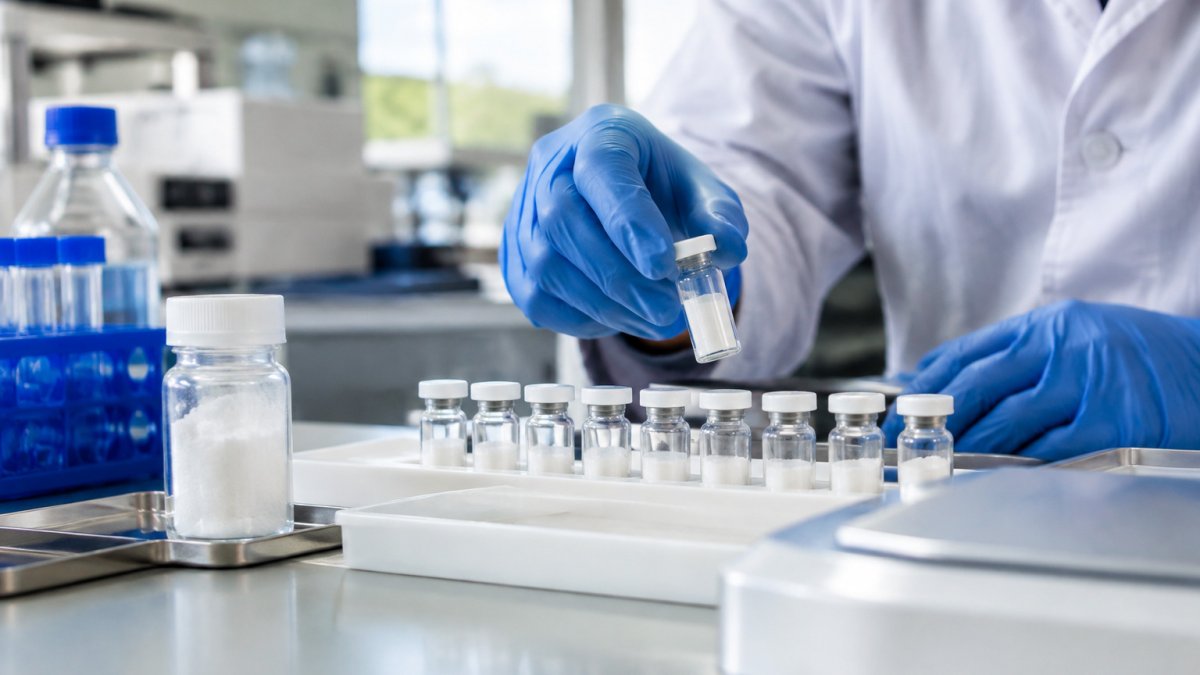
Domestic peptide suppliers solve this by holding stock locally, running verification before dispatch, and shipping via Australia Post Express the same business day. At OptiPeps, we've structured our Melbourne-based operation specifically around this model.
The practical benefit is straightforward: your research moves faster because your supply chain doesn't become a bottleneck.
Beyond speed, there's a deeper advantage. When you work with a local supplier, you're building a relationship with people who understand your regulatory environment, your shipping constraints, and your quality expectations. See real examples of why Australian researchers have already chosen local suppliers. You're not navigating international time zones to resolve issues.
How to Verify Peptide Suppliers Before Committing
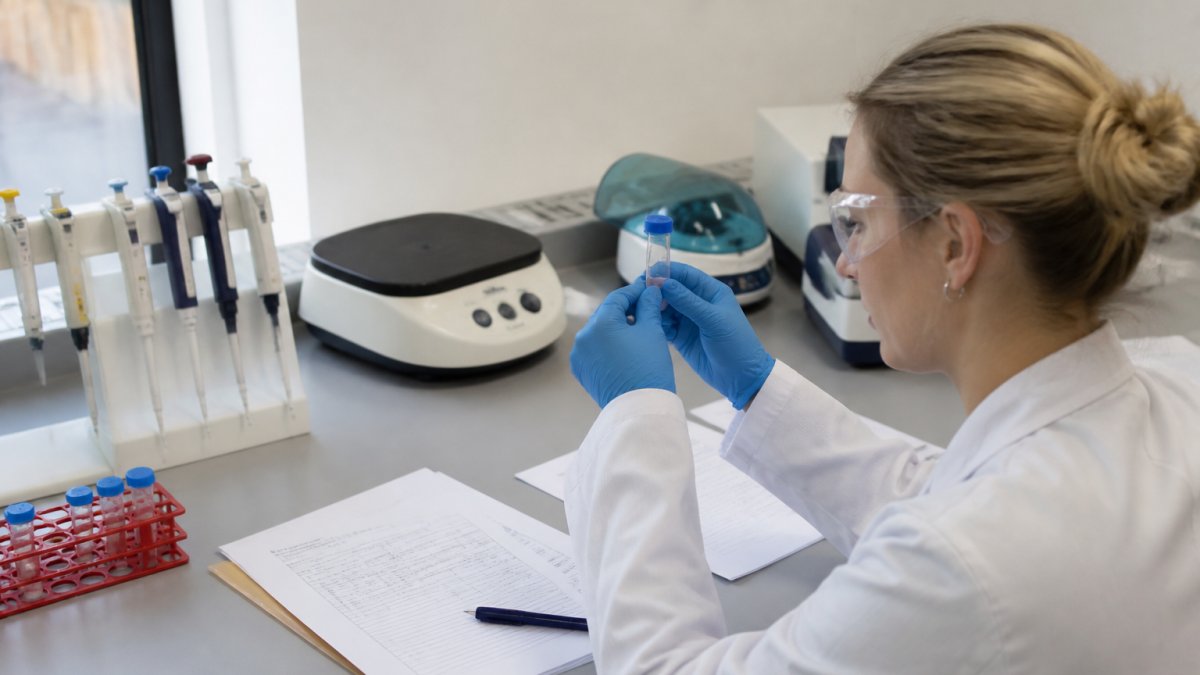
Verification separates reliable suppliers from risky ones. Before you place your first order, you need a clear process for evaluating whether a supplier can actually deliver what they claim.
Start by requesting their quality documentation framework. Ask what testing they perform in-house versus what they outsource to independent laboratories. A supplier who relies entirely on their own testing has inherent bias, they're grading their own work. The better model is third-party verification.
Next, ask for batch records from previous orders, not just a generic certificate template. Batch records should show specific lot numbers, test dates, and results that match the peptide sequence and purity standard you need. If a supplier hesitates to provide this, that's a warning sign.
Check whether their documentation includes chain-of-custody information. You need to know who handled the peptide, when, and under what storage conditions. Peptides are sensitive to temperature and light.
Finally, ask about their process if a batch fails testing. Do they replace it? Refund? How quickly? A supplier who stands behind their product will have a clear, documented answer.
Understanding Peptide Certificate of Analysis and Quality Standards
A Certificate of Analysis (CoA) is your primary tool for verifying that a peptide batch meets your research requirements. But not all CoAs are equally rigorous. Understanding what a credible CoA contains helps you spot suppliers cutting corners.
A legitimate CoA should include the peptide sequence, the lot number, the testing date, and the specific purity percentage achieved. It should name the testing method, HPLC, HPLC-MS, or another analytical technique, and specify the wavelength or detection method used. Generic statements like "tested for purity" mean nothing.
Look for the testing laboratory's accreditation. In Australia, accredited laboratories operate under NATA (National Association of Testing Authorities) standards. If a CoA doesn't reference NATA accreditation or equivalent international recognition, the testing may not meet institutional standards for peer-reviewed research.
The CoA should also specify what "purity" actually means in context. Is it mass purity (the percentage of the desired peptide by weight)? Is it HPLC purity (the percentage of signal from the target compound)? These differ, and the distinction matters for your experimental design.
For your research, you want understand what a peptide certificate of analysis actually shows and how to interpret it when evaluating domestic suppliers. This document becomes your evidence trail if results are questioned during peer review.
Overseas Peptide Shipping Delays: Real Risks and Timelines
Ordering from overseas suppliers introduces variables you cannot control. Understanding these delays helps explain why domestic peptide suppliers offer genuine advantage beyond just speed.
International shipping for research chemicals typically takes 10-21 days in transit. That's before customs processing. Australian customs clearance for research chemicals can add 5-15 business days depending on documentation completeness and whether the shipment triggers additional scrutiny.
But that's the optimistic scenario. Delays compound when documentation is incomplete or when customs officials request clarification. If your supplier is in a different time zone, getting answers takes another day or two. If the shipment arrives on a Friday and customs is closed, you're waiting through the weekend.
Temperature control during international shipping adds another layer of risk. Peptides are sensitive to heat and degradation. Long transit times in uncontrolled shipping containers mean your peptide may arrive chemically compromised, even if it wasn't damaged.
The alternative is working with a guide to avoiding customs delays when sourcing research chemicals domestically. Domestic suppliers hold stock locally, meaning your order ships the same business day. Australia Post Express delivery reaches most locations within 1-2 business days.
For time-sensitive research, this difference is transformative. Your experiments run on your schedule, not on international shipping timelines.
Research Peptide Supplier Quality Testing: What to Expect
Quality testing is where supplier claims meet reality. Understanding what rigorous testing actually involves helps you evaluate whether a supplier's quality promises are meaningful.
The baseline is HPLC (High-Performance Liquid Chromatography) analysis. This separates peptide components and measures the percentage of your target compound versus impurities. HPLC gives you purity data, but it doesn't confirm molecular identity.
HPLC-MS (mass spectrometry) adds molecular weight confirmation. It verifies that the compound is actually your peptide, not something chemically similar. For research where molecular identity is critical, HPLC-MS is the standard. It's more expensive than HPLC alone, but it's also far more reliable.
Some suppliers offer additional testing: endotoxin analysis (for cell-based research), sterility testing (for in-vivo work), or amino acid composition analysis (for verification of sequence). These tests are appropriate for specific applications.
Watch for suppliers who claim "99%+ purity" without specifying the testing method. That number means nothing without context. Is it HPLC purity? HPLC-MS purity? Gravimetric purity? A credible supplier will specify the method and provide the actual chromatogram or mass spectrum as evidence.
The other factor is testing timing. Testing should happen before dispatch, not after. If a supplier tests after you receive the product, you're already committed to using potentially substandard material.
Cost of Switching Suppliers: Hidden Factors Beyond Unit Price
The decision to switch suppliers often comes down to price comparison. But total cost is more complex than unit price per vial.
Consider revalidation costs. If you change suppliers, your protocols may need to account for differences in purity, batch variability, or documentation format. You might need to run validation experiments to confirm that the new supplier's peptide performs identically to your previous source.
Shipping costs vary significantly. Overseas suppliers often quote low per-unit prices but charge substantial international shipping fees. Domestic suppliers may have slightly higher per-unit costs but offer free or low-cost Express Post shipping on orders above a threshold.
Payment friction adds hidden cost. Some overseas suppliers charge card surcharges or require wire transfers with associated bank fees. Working with a local supplier using Australian bank transfers eliminates these fees entirely.
There's also the cost of supply chain risk. If an overseas supplier fails to deliver or a shipment is lost in transit, recovering your money can take weeks or months. You've already paid for the peptide but can't use it.
Finally, consider the cost of research delays. If an overseas shipment is delayed by customs, your experiments stall. Your team is idle. Your research timeline extends.
Building a Reliable Local Supply Chain for Your Research
Transitioning to a domestic supplier is straightforward if you approach it methodically. Start by identifying your core peptide requirements. List the sequences you use most frequently, the purity standards your protocols require, and any special modifications you need.
Then evaluate whether a domestic supplier can meet those requirements. Ask about their product range and lead times for non-stock items. A supplier who stocks your most-used peptides can ship immediately.
Request a small pilot order. Order one or two peptides you've used before from your previous supplier, then run them through your standard protocols. Compare results to your historical data. This validation step takes time upfront but gives you confidence that switching won't compromise your research.
Once you're confident the quality and performance match your needs, transition your regular orders. Most researchers find that after the initial validation phase, switching to a domestic supplier is seamless, and faster.
For your research team, explore the range of research-grade peptides available from Australian suppliers and how to contact them directly.
At OptiPeps, our Melbourne-based operation is built specifically for this workflow. We hold stock of common research peptides, ship via Australia Post Express the same business day, and provide batch-level transparency so you can review documentation before committing to your experiments.
Switching peptide suppliers requires confidence that quality won't suffer and timelines won't slip. At OptiPeps, every vial is HPLC-MS verified to 99%+ purity, dispatched the same business day, and backed by batch-level transparency you can defend in peer review. Add to cart and experience the difference a domestic research peptide supplier delivers.
| Factor | Overseas Suppliers | Domestic Peptide Suppliers |
|---|---|---|
| Shipping time | 10-21 days transit + 5-15 days customs | 1-2 days via Express Post |
| Quality verification | Often in-house only | Third-party HPLC-MS testing |
| Documentation timing | Arrives after delivery | Available before dispatch |
| Payment fees | Card surcharges, wire transfer fees | No surcharges on bank transfer |
| Supply chain risk | High (international logistics) | Low (local inventory) |
| Revalidation required | Often necessary | Minimal if standards align |
References and External Sources:
The information draws on industry best practices for research-grade peptide sourcing, quality assurance standards, and supply chain management. For specific guidance on peptide testing methodologies and documentation standards, researchers should consult NATA accreditation standards for analytical testing laboratories, which sets the quality benchmarks for accredited testing in Australia. For understanding customs and import procedures for research chemicals, the Australian Border Force guidelines on importing research materials provides official requirements. Additionally, peer-reviewed research on peptide stability during storage and transport demonstrates the importance of controlled conditions throughout the supply chain.
Frequently Asked Questions
What should I look for in a peptide certificate of analysis?
A credible certificate of analysis must include batch-specific HPLC-MS data showing purity percentage, the testing date, the accredited third-party laboratory that performed the analysis, and the exact compound specification tested. Cross-reference the batch number on your vial with the certificate number to confirm traceability. Avoid suppliers offering only in-house testing without independent verification; peer-reviewed research requires defensible documentation from accredited external laboratories.
How can overseas peptide shipping delays affect my research timeline?
International orders typically face 2-4 week transit times plus 3-7 days in customs clearance, totalling 3-5 weeks minimum. Peptide degradation accelerates during extended shipping, especially in variable temperatures. Customs hold-ups can strand temperature-sensitive compounds at border facilities, compromising purity before arrival. Domestic suppliers with same-day or next-day dispatch eliminate these delays, allowing you to maintain batch freshness and meet experiment deadlines without revalidation protocols.
What does HPLC-MS testing actually verify about research peptide quality?
HPLC-MS (high-performance liquid chromatography-mass spectrometry) measures both purity and molecular weight accuracy. It identifies the percentage of your target peptide versus contaminants or degradation products, and confirms the compound matches the stated molecular formula. This dual verification prevents costly failed experiments from mislabelled or contaminated batches. For in-vitro research, 99%+ purity documented by HPLC-MS is the standard required for reproducible, publishable results.
Why is supplier stability important for long-term research projects?
If your supplier closes or changes formulation mid-project, you face workflow revalidation, batch inconsistency, and potential data rejection in peer review. Established domestic suppliers with transparent operations, public batch records, and local accountability provide continuity assurance. Verify supplier longevity by checking their track record, customer retention, and whether they hold stock domestically, indicators of operational stability and commitment to the research community.