Table of Contents
- What Separates Research Grade Peptides Australia Suppliers
- Supplier Comparison: Purity, Testing and Shipping at a Glance
- The Research Peptide Supplier Quality Checklist
- How to Read a Peptide Certificate of Analysis
- HPLC and Mass Spectrometry Peptide Testing Explained
- Wholesale Research Peptides and Bulk Pricing
- Storage, Handling and Shipping Integrity
- Conclusion: Building a Supply Chain You Can Defend
- Frequently Asked Questions
Last Updated: October 14, 2026
What Separates Research Grade Peptides Australia Suppliers
Not every vendor selling vials online belongs in a laboratory supply chain.
At OptiPeps, every compound we dispatch is HPLC-MS verified to a 99%+ purity standard, and every order carries a traceable batch number, the baseline we would demand from any supplier, including ourselves.
A peptide is only as useful as its documentation. Without a certificate of analysis tied to a specific lot, you cannot defend a result in peer review or rule out degradation in transit.
Why Domestic Dispatch Changes Your Timeline
Domestic dispatch removes the customs variable: stock held locally can move the same day via express post rather than sitting in an international clearance queue.
We hold stock in our facility to avoid that bottleneck. Orders over $100 ship free via Express Post, with no card surcharges on Australian bank transfers.
Local operations carry higher overhead, reflected in pricing. The question is whether a two-week customs delay is acceptable for your protocol.
The Regulatory Line Between Research and Therapeutic Use
Research peptides and therapeutic peptides are not interchangeable, legally or practically.
That boundary is not a technicality. It shapes what a supplier can legally say, how a product must be labelled, and what documentation accompanies it.
For laboratory buyers, a supplier that blurs this line should be questioned. Clear labelling and honest scope statements signal an operation that understands its obligations.
Supplier Comparison: Purity, Testing and Shipping at a Glance
Most supplier round-ups hand you a table and ask you to trust it. This one shows its working: the methodology, the criteria we weight, and the evidence standard a claim must meet.
How This Comparison Was Built
Suppliers were assessed on publicly available information only: published certificates of analysis, stated testing arrangements, dispatch and shipping disclosures, labelling and scope statements, and published terms on minimums, bulk rates, and returns. Where nothing is published, a criterion is scored unverified rather than assumed adequate.
We weight criteria by how directly they affect the defensibility of an experiment:
- Batch-linked certificate of analysis, highest weight. Without a document tied to the exact lot you receive, nothing else can be audited.
- Independent testing with named methods, high weight. HPLC purity and mass spectrometry identity, reported with method conditions and a testing date.
- Domestic dispatch and tracked shipping, moderate weight. Affects transit time and temperature exposure, but not the identity of the compound.
- Storage and handling disclosures, moderate weight. Determines whether a verified batch stays verified on arrival.
- Bulk terms, minimums, and refund policy, lower weight. Commercial factors that matter at scale but do not substitute for documentation.
The Comparison Criteria and Evidence Standard
| Criterion | What to Look For | Evidence That Counts |
|---|---|---|
| Purity verification | HPLC-MS on every batch | A batch-linked report naming the method |
| Independent testing | Reports from a laboratory other than the supplier | Laboratory name, report date, method description |
| Certificate of analysis | Public and batch-linked | Batch number matching the vial label |
| Dispatch model | Domestic stock, same-day handling | Published cutoff and dispatch terms |
| Shipping | Tracked express post | Carrier, tracking, and stated transit expectations |
| Storage and handling | Compound-specific instructions | Storage temperature and light-protection guidance |
| Bulk and minimums | Tiered rates or stated minimums | Published terms, not "contact us" alone |
| Returns and replacements | Documented process | Written policy covering failed or misdescribed batches |
A supplier that scores well on purity but poorly on documentation is a liability, as is one with fast shipping and no independent testing. The criteria only work together, so documentation outweighs logistics.
How to Apply This to Any Supplier
Treat the table as a scoring sheet, including for us. For each criterion, ask the supplier to point to the specific document or published term that satisfies it. If the answer is a general statement rather than a document, mark it unverified. A supplier that can produce a batch-specific certificate, a named testing laboratory, and written storage and returns terms is doing the work.
The Research Peptide Supplier Quality Checklist
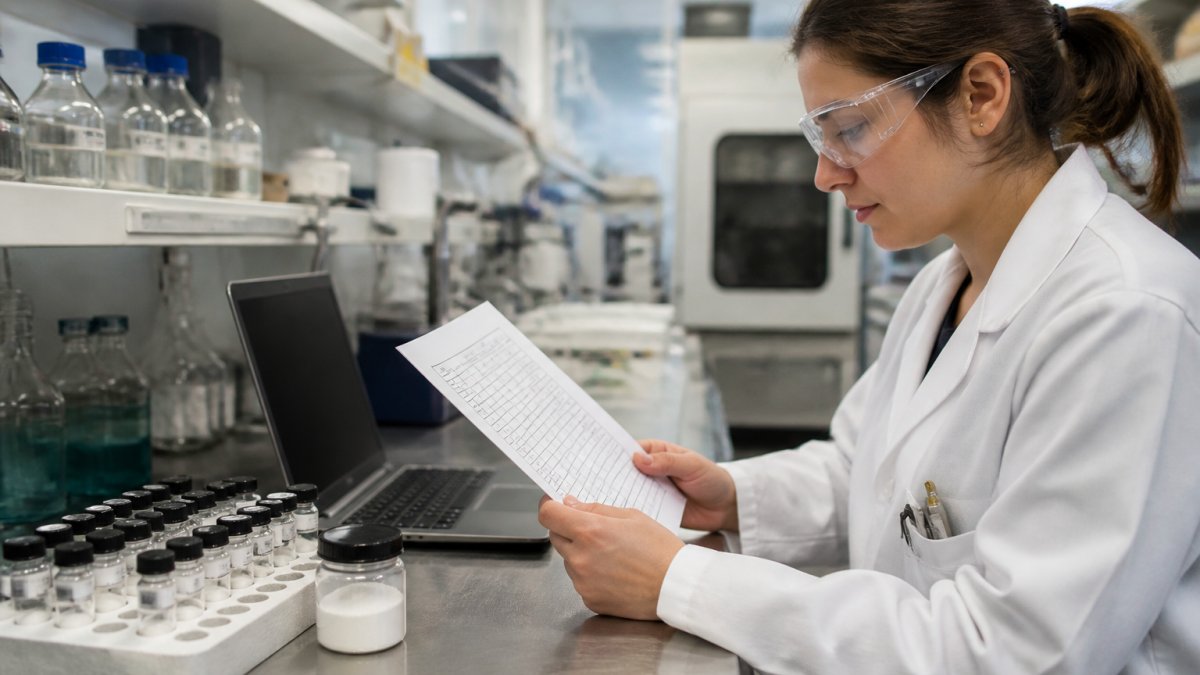
A research peptide supplier quality checklist is the fastest way to filter vendors before committing budget. Run every prospective supplier through the same seven checks.
Seven Checks Before You Place an Order
- Does the supplier publish a certificate of analysis for the exact batch you are buying?
- Is that certificate from an independent laboratory, not an in-house result?
- Does the certificate report both HPLC purity and mass spectrometry confirmation?
- Is the purity figure stated to a defined standard, such as 99% or above?
- Does the supplier dispatch domestically, with tracked express shipping?
A common mistake is treating price as the first filter. It should be the last. A cheaper vial that fails verification costs you the experiment, the reagents, and the time to reorder.
How to Read a Peptide Certificate of Analysis
A peptide certificate of analysis is a batch-specific document reporting the analytical results for that lot: identity, purity, and the methods used to confirm both. Without a batch number, it is a brochure, not a certificate.
Here is what a defensible certificate contains:
- Batch or lot number matching the vial label
- Compound name and sequence as ordered
- HPLC purity percentage with the method conditions
- Mass spectrometry result confirming molecular weight
- Testing laboratory name and report date
What most guides miss is the sequence of verification. Identity comes first: mass spectrometry confirms the compound is what the label claims. Purity comes second: HPLC measures how much of that compound is present versus related impurities.
Red Flags in a Certificate of Analysis
Watch for these warning signs:
- No batch number, or a batch number that does not match the vial
- Purity stated without a method description
- Results attributed to an unnamed "in-house laboratory"
- A single certificate reused across multiple product listings
- Missing mass spectrometry data
Any one of these is enough to request clarification. Two or more should end the conversation.
HPLC and Mass Spectrometry Peptide Testing Explained
HPLC and mass spectrometry peptide testing answer two different questions, and you need both.
HPLC tells you how clean the sample is, and MS tells you what it actually is.
The United States Pharmacopeia reference standards programme maintains widely used analytical standards that laboratories reference when validating methods, and comparable frameworks exist across pharmacopoeial systems.
At OptiPeps, every batch is HPLC-MS verified by accredited third-party laboratories before dispatch, and the resulting certificates are published at batch level.
Wholesale Research Peptides and Bulk Pricing
Wholesale research peptides pricing depends on quantity, compound, and order frequency, so we do not publish fixed rates. Here is how to compare total cost across suppliers, because the sticker price per vial is rarely the number that matters.
The Total Cost of a Bulk Order
When you compare bulk quotes, build the figure from these components rather than the headline rate:
- Unit price at your quantity. Ask for the rate at your actual order size, not the smallest tier.
- Minimum order value. A low unit price behind a high minimum can cost more than a smaller order at a higher rate.
- Shipping and handling. Free thresholds and express options change the effective cost per vial, especially on small top-up orders.
- Payment method fees. Surcharges on cards versus bank transfer can add a meaningful percentage at bulk scale.
- Testing and documentation. A batch-linked certificate should be included, not sold as an add-on.
Add these together and divide by the number of usable vials. That is the only figure worth comparing.
Why Bulk Lowers the Unit Cost
Larger orders lower the cost per vial because testing, handling, and shipping costs spread across more units, and they reduce the number of separate dispatches you manage. For recurring protocols, scheduled bulk orders are usually more efficient than ordering ad hoc.
Two practical considerations before you scale up:
- Storage capacity. Bulk orders require freezer space and a plan for aliquotting, so confirm your cold storage before committing.
- Batch consistency. Ask whether a bulk order can be drawn from a single batch. Working from one lot reduces analytical variability across an experiment, which matters more than a marginal per-vial saving.
Questions to Ask Before Agreeing to Bulk Terms
- Is the quoted rate tied to a single batch, or drawn from mixed lots?
- Does the certificate of analysis cover the full quantity, or only a sample?
- What are the minimum order value and any restocking or cancellation terms?
- Are shipping and payment fees included in the quote or added at checkout?
- What is the written process if a batch fails verification on arrival?
For current wholesale and 10-pack pricing, check our product catalogue or contact us with your compound list. Ask for the batch-linked certificate with the quote, and compare total cost, not the headline rate.
Storage, Handling and Shipping Integrity
Shipping integrity determines whether a verified batch arrives usable. Purity verified at the facility means nothing if the compound degrades in transit.
Most research peptides require cold storage, and some are sensitive to repeated freeze-thaw cycles. The practical rules are straightforward:
- Store lyophilised peptides at the temperature the certificate specifies, typically frozen for long-term storage
- Aliquot before freezing to avoid repeated thawing of a single vial
- Keep vials sealed and protected from light where the compound is light-sensitive
- Inspect packaging on arrival and flag any temperature excursion immediately
Because we dispatch from our facility with same-day handling, transit time is short and predictable, reducing exposure compared with international routes where a parcel may sit in clearance for days without temperature control. If something goes wrong mid-shipment, tracked express post gives you a documented trail to raise it with us.
Conclusion: Building a Supply Chain You Can Defend
The hard part of peptide sourcing is not finding a vendor.
We built OptiPeps around that standard: 99%+ HPLC-MS verified purity, public batch-level certificates of analysis, same-day dispatch, and free Express Post on orders over $100.
Browse the OptiPeps catalogue and add your compounds to cart, or contact us with your sequence list and we will confirm availability, documentation, and bulk pricing.
Frequently Asked Questions
How can you verify a research-grade peptide supplier?
Check three things: a published certificate of analysis for the exact batch you receive, purity results from HPLC and mass spectrometry rather than a single figure, and a supplier who will answer questions about testing methods. A research peptide supplier quality checklist should also cover dispatch location, storage conditions and what happens if a batch fails. If a supplier cannot show batch-level documentation on request, treat the purity claim as unverified.
What should a peptide certificate of analysis include?
A useful peptide certificate of analysis lists the compound name, batch or lot number, molecular weight, appearance, purity percentage and the analytical methods used, typically HPLC and mass spectrometry. It should also show the testing laboratory and a date. If the document is undated, lacks a batch number, or quotes purity without naming a method, it will not hold up if you need to defend your sourcing in peer review.
Where can I find wholesale research peptides in Australia?
Wholesale research peptides are usually arranged directly with a supplier rather than through a public price list. Ask about 10-pack pricing, whether rates change at higher quantities, and whether stock is held domestically or dispatched from overseas. Domestic stock matters because it avoids customs delays that can leave temperature-sensitive compounds sitting in transit. Request a written quote that states the batch, quantity, dispatch method and expected delivery window.
How do research peptides differ from therapeutic peptides?
Research peptides are supplied for in-vitro laboratory work and are not registered therapeutic goods. Therapeutic peptides are approved medicines that must meet the requirements of the Therapeutic Goods Administration, including Good Manufacturing Practice and clinical trial evidence. That distinction affects labelling, documentation and how you handle the material. If your work sits anywhere near human use, you need the regulatory pathway, not a research-grade vial.