Last Updated: November 15, 2026
Quick Summary
Bulk peptide orders are cheaper per vial but not always cheaper per experiment, because freight, customs exposure and re-validation can erase the saving. Suppliers structure bulk as 10-vial kits, milligram minimums or mix-and-match kit thresholds, so compare cost per milligram and match minimums to your realistic consumption over shelf life.
- One kit typically contains 10 vials, with price breaks at three, five and ten kits.
- Compare tiers by cost per milligram rather than cost per vial to avoid false savings.
- Request batch-specific certificates of analysis, HPLC data and independent testing before negotiating price.
- Confirm freight cost, dispatch timeline and replacement terms in writing before ordering.
- Size bulk orders to freezer capacity and consumption rate, not just the best price break.
Table of Contents
- What Bulk Ordering Options Actually Exist for Research Peptides?
- The Comparison Table: Supplier Types Side by Side
- Minimum Order Quantities and Volume Price Breaks
- How Peptide Purity Testing Changes What You Pay For
- Peptide Supplier Quality Documentation You Should Demand
- Custom Peptide Synthesis vs Standard Bulk Packs
- Research Peptide Storage and Shipping: The Hidden Cost Line
- Requesting a Bulk Quote from OptiPeps
- Frequently Asked Questions
What Bulk Ordering Options Actually Exist for Research Peptides?
Bulk peptide orders have become the default procurement route for many laboratories, and for good reason: placing bulk peptide orders spreads cost across more vials and reduces the handling involved in repeat single-vial purchases. This guide breaks down the peptide supplier bulk ordering options available to research teams, from standard multi-vial packs to custom synthesis, so you can judge whether bulk buying genuinely saves money once testing, storage and freight are counted.
The honest answer is that bulk ordering is cheaper per vial, but not always cheaper per experiment. Suppliers structure bulk in different ways: some sell 10-vial kits, others set minimum kit counts, and some price per milligram of peptide powder. The option you choose determines what you pay and what documentation you receive.
Below, we compare supplier types side by side, explain how minimum order quantities and volume price breaks work, and show where hidden costs sit.
The Comparison Table: Supplier Types Side by Side
Four supplier models dominate the market, and each suits a different buyer. The table below summarises how they differ on the criteria that actually affect a research budget.
| Supplier type | Order minimum | Pricing structure | Quality documentation | Best for |
|---|---|---|---|---|
| Domestic research supplier | Single vial or multi-pack | Per-vial and per-pack pricing | Batch-level CoA, third-party HPLC-MS | Labs needing fast, traceable supply |
| Bulk-focused supplier | Often a multi-vial kit | Volume discounts at set kit counts | Varies; confirm before ordering | High-volume routine work |
| Overseas wholesale supplier | Kit minimums, mix-and-match | Published prices, tiered by kit count | Certificate of analysis per batch | Buyers with time to absorb freight delays |
| Custom synthesis house | Sequence-dependent | Quoted per sequence and scale | Sequence-specific analytical data | Non-standard or modified sequences |
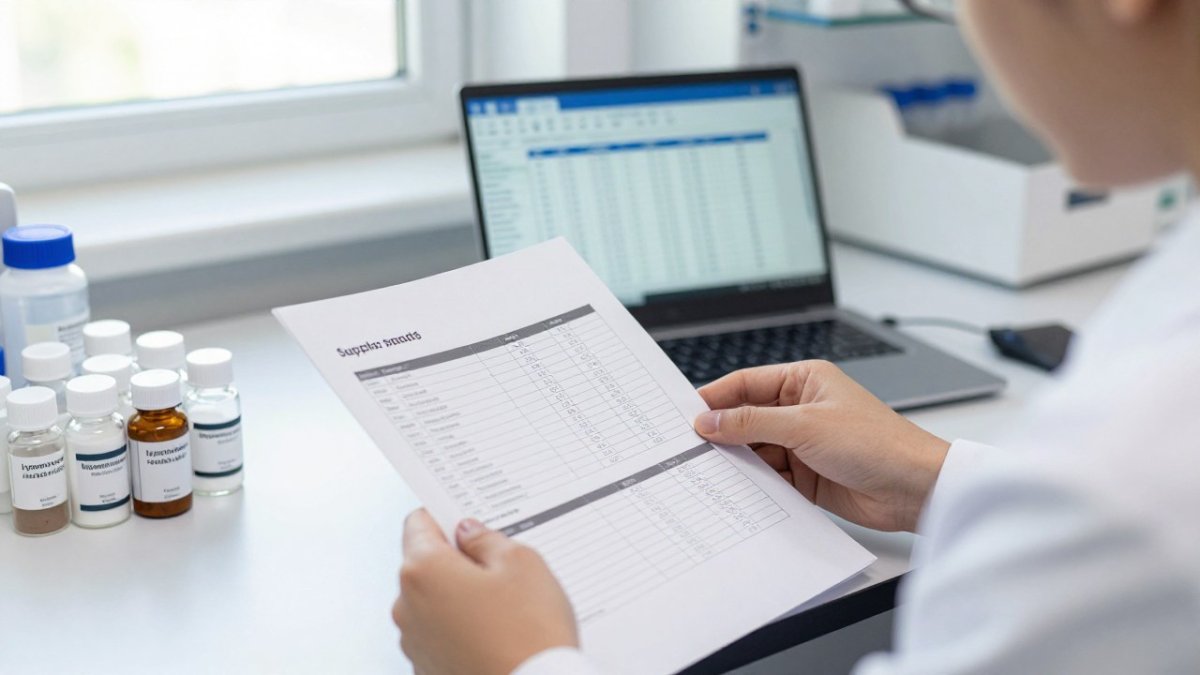
What most guides miss is that the cheapest per-vial price rarely wins once you account for freight, customs exposure and re-validation. A domestic supplier that dispatches same-day can beat a cheaper overseas order that sits in a holding facility for a fortnight. If you want a structured way to score suppliers, a quality checklist for peptide suppliers is a sensible starting point.
Minimum Order Quantities and Volume Price Breaks
Minimum order quantities are the first filter in any bulk decision, and they are where most supplier comparisons fall apart. Competitors mention bulk pricing but rarely show the actual tier structures, so it is worth understanding the common patterns before you request a quote.
Three MOQ models dominate:
- Kit-based minimum. One kit typically contains 10 vials, and per-kit pricing steps down at higher kit counts. A common pattern is a one-kit minimum for first orders, with breaks at three, five and ten kits.
- Milligram minimum. Some suppliers price peptide powder by milligram and set a floor in milligrams rather than vials, which suits custom or high-volume work but makes cross-supplier comparison harder.
- Mix-and-match minimum. Wholesale suppliers often require a minimum number of kits but allow you to combine different compounds within one order to reach the threshold, which suits labs running several parallel lines.
Volume price breaks usually follow one of two structures. The simpler is a step discount: for example, a per-vial price at one kit, a lower price at three kits, and a lower price again at ten kits. The more complex is a quoted tier, where the supplier prices the whole order after you state quantity, compound and documentation requirements. Step discounts are easier to budget; quoted tiers often yield a better price at high volume but take longer to compare.
Ask five questions before you commit:
- What is the smallest order I can place, in vials or milligrams?
- At what quantities do price breaks apply, and are they automatic or quoted?
- Can I mix compounds within one order to reach the threshold?
- Does the discount apply per line item or to the order total?
- Is the price break based on vials ordered or milligrams of peptide?
To compare tiers fairly, calculate cost per milligram rather than cost per vial. A 5 mg vial and a 10 mg vial at the same headline price are not equivalent, and a discount that applies only to larger vial sizes can look better than it is. Worked example: if a 5 mg vial is priced at one rate and a 10 mg vial at a lower per-vial rate, the 10 mg vial may still be cheaper per milligram even without a volume discount, so compare like with like before assuming a tier is a saving.
Watch out: a low per-vial headline price can hide a minimum that forces you to buy more than your study needs. Peptide powder has a shelf life, and stock that expires on the shelf is a cost, not a saving. Match the MOQ to your realistic consumption over the shelf life, not to the discount that looks best on the quote.
How Peptide Purity Testing Changes What You Pay For
Peptide purity testing is the analytical verification of a peptide's identity and purity, typically by HPLC with mass spectrometry confirmation, and it is the main reason two suppliers can quote very different prices for the same sequence. Verified material costs more because testing costs money.
For peer-review defensibility, you want independent third-party results tied to the specific batch you receive, not a generic specification sheet.
If you need to understand exactly what third-party testing requirements should cover, our guide to third party peptide testing requirements explains the standards worth demanding in a quote.
Peptide Supplier Quality Documentation You Should Demand
Quality documentation is the paper trail that lets you defend a result in review, and it should be requested before price negotiation, not after. At minimum, ask for a batch-specific certificate of analysis, the analytical method used, and confirmation that testing was performed independently.
A practical pre-order checklist:
- Certificate of analysis matches the batch number on the vial
- HPLC chromatogram and mass spectrometry data are included
- Testing laboratory is named and independent of the supplier
- Purity specification is stated numerically, not as a vague claim
- Storage and handling instructions accompany the shipment
- Replacement or refund process is stated in writing
We publish the rules every batch is held to, including our HPLC-MS methodology and traceability framework, because a supplier that will not show its testing process is asking you to take the claim on faith.
Custom Peptide Synthesis vs Standard Bulk Packs
Custom peptide synthesis is the production of a peptide to your specified sequence, modification or scale, rather than supply from a standard catalogue. It sits at the opposite end of the market from bulk packs of common compounds.
Custom synthesis wins on fit: non-standard sequences, labelled variants and unusual modifications are only available this way, and pricing is quoted per sequence and scale.
The decision rule is simple. If your compound is catalogued and your study is routine, buy bulk packs. If your sequence is niche or modified, expect a quote and a lead time, and budget for analytical characterisation as part of the cost. Many labs run both: catalogue packs for screening work, custom batches for the compounds that graduate to the main study.
Research Peptide Storage and Shipping: The Hidden Cost Line
Research peptide storage and shipping is where bulk savings quietly disappear, and it is the part of a bulk quote most suppliers gloss over. Lyophilised peptide powder is sensitive to heat, moisture and repeated temperature swings, so a large order that arrives degraded is a total loss, not a discount.
Three costs hide here, and a fair comparison should put a number against each.
Freight. Domestic dispatch fees and service times vary by supplier, so confirm them in writing before ordering. International freight is priced by weight and service level, and express cold-chain options cost more than standard post.
Lead time and customs. Dispatch and delivery timelines depend on the supplier, so confirm them before ordering. International orders add transit time plus customs clearance, and time in transit is time at uncontrolled temperature. Customs exposure is not just delay: a shipment held for assessment can sit outside cold-chain conditions, and regional restrictions on certain compounds can mean a parcel is refused or returned.
Spoilage and storage. A bulk order you cannot store correctly degrades before you use it. Lyophilised powder should be held cold and dry, and reconstituted peptide should be aliquoted and frozen rather than repeatedly thawed. The practical rule is to size your order to your freezer capacity and your consumption rate, not just to the best price break.
A simple way to compare suppliers on this line is to request the freight cost to your postcode, dispatch timeline, expected transit time, and replacement or refund terms in writing. Our practical guidance on peptide research stability and storage covers reconstitution, aliquoting and freezer practice. Get storage right before you scale order size, not after.
Requesting a Bulk Quote from OptiPeps
A bulk quote is only useful if it is comparable, so ask every supplier for the same six items: pack size, per-vial price, batch documentation, freight cost, dispatch timeline and replacement terms.
At OptiPeps, every batch is HPLC-MS verified to a 99%+ purity standard before dispatch, with public certificates of analysis tied to the batch you receive. Stock is held in a Melbourne-based facility and dispatched same day via Australia Post Express, with free Express Post on orders over $100 and no card surcharge on Australian bank transfers. If you are ready to move, our guide to the research peptide payment and ordering process walks through how ordering works before you request a quote.
Bulk buying rewards labs that plan procurement as carefully as they plan experiments. The challenge is finding a supplier whose documentation, dispatch and storage standards hold up when a reviewer asks questions. OptiPeps supplies research-grade peptides with batch-level transparency, HPLC-MS verification and same-day dispatch from domestic stock. Get started with OptiPeps and build your next bulk order on verified batches rather than unconfirmed claims.
Frequently Asked Questions
What should researchers check before placing a bulk peptide order?
Confirm the minimum order quantity, the per-vial price at each volume tier, and whether a Certificate of Analysis is supplied per batch rather than per product line. Check that purity is verified by HPLC-MS at 99% or above, and that the supplier holds stock domestically so you are not exposed to customs delays. Ask about dispatch cut-off times and replacement terms in writing before committing to a multi-vial order.
How do bulk peptide packs differ from custom peptide synthesis?
Bulk packs are catalogue compounds supplied in multi-vial quantities, usually at a lower per-vial price as volume rises. Custom peptide synthesis produces a sequence or modification that is not held as standard stock, so lead times are longer and pricing reflects the synthesis run rather than pack size. If your work involves niche modifications, confirm whether the supplier synthesises to order or only ships catalogue lines.
What documentation should a peptide supplier provide with a bulk order?
Ask for a batch-specific Certificate of Analysis showing HPLC-MS results, purity percentage, and the testing laboratory's identity. Independent third-party testing is more defensible in peer review than in-house results alone. The documentation should let you trace each vial to a batch number, and it should be available before you order, not only after dispatch.
What affects the price of a bulk peptide order?
Price depends on compound, pack size, volume tier and whether testing is included. Shipping method and any import handling also shift the total, particularly for overseas orders where customs clearance can add weeks and unpredictable charges. Domestic suppliers remove that variable. Request a written quote covering vials, testing documentation and freight so you can compare total landed cost rather than headline per-vial pricing.