Last Updated: October 30, 2026
Quick Summary
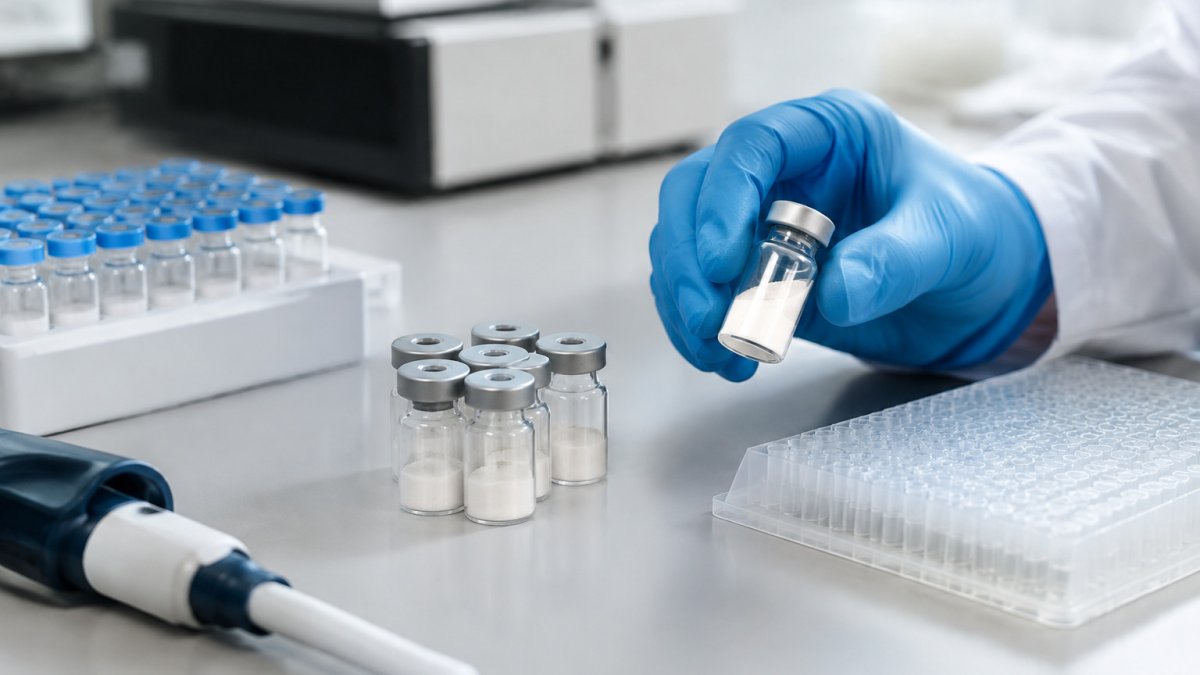
The best peptide suppliers for labs prove batch by batch what is in the vial and how it was tested, with HPLC-MS verification, a public certificate of analysis, and domestic dispatch mattering more than a long catalogue. At OptiPeps, every batch is HPLC-MS verified to a 99%+ purity standard before dispatch.
- Apply a pass-or-fail checklist covering documentation, analytical testing, traceability, scale, and purchasing terms before ordering.
- A COA should identify the compound, batch, methods, results, and testing laboratory, or it is not doing its job.
- Confirm minimum order quantity, lead time, freight and customs exposure, payment surcharges, and refund terms in writing.
- Test each new lot on receipt and file your result alongside the supplier's COA.
- Treat marketing that implies human use for a research-use-only compound as a disqualifying signal.
Table of Contents
- What Separates the Best Peptide Suppliers for Labs
- The Peptide Supplier Quality Checklist
- Supplier Comparison: How the Shortlist Stacks Up
- What a Peptide Certificate of Analysis Should Tell You
- Research Peptides vs Therapeutic Peptides: Know What You're Buying
- Research Peptide Storage After Delivery
- Request a Batch COA and Start Your Order with OptiPeps
- Frequently Asked Questions
What Separates the Best Peptide Suppliers for Labs
The best peptide suppliers for labs prove, batch by batch, what is in the vial and how it was tested.
A supplier's website tells you almost nothing about quality control; the documentation behind the product does. That is the filter separating a serious biochemical supplier from a reseller with good copywriting.
Below, we break down the checklist we would use ourselves, then compare five suppliers against it.
The Peptide Supplier Quality Checklist
A peptide supplier quality checklist is a short list of pass-or-fail criteria applied before a first order, covering documentation, analytical testing, traceability, scale, and purchasing terms.
Here is the checklist we recommend working through:
- A batch-specific certificate of analysis is available before purchase, not after
- Testing names the method: HPLC for purity, mass spectrometry for identity
- The testing laboratory is identified, ideally an accredited third party
Documentation, Testing and Traceability
Documentation is where suppliers separate fastest. A COA listing only a purity figure, with no method, batch number or laboratory, tells you very little. You want a document tying a specific lot to specific analytical results.
Traceability means the batch number on your vial resolves to that document months later. For a deeper walkthrough of how these records are structured, see our guide on how to interpret a certificate of analysis for peptides. If you are assessing how identity and purity are actually confirmed, our HPLC-MS testing guide for research peptides covers the method in detail.
Scale, Availability and Purchasing Terms
Scale matters more than most buyers expect. A supplier set up for milligram-scale catalogue sales may not handle a larger research-scale request, and a custom synthesis house may not stock anything for same-week dispatch.
Domestic stock removes customs exposure entirely, which matters when a study is time-sensitive. Confirm payment methods, minimum order quantities, and whether freight is included; pricing on research peptides varies with quantity and compound, so confirm current figures directly with each supplier.
Supplier Comparison: How the Shortlist Stacks Up
The comparison below applies the same five criteria to every supplier, documentation, testing transparency, scale, availability, and purchasing terms, and flags where information could not be confirmed rather than filling the gap with marketing language.
| Supplier | Testing Reported | Documentation | Dispatch Origin | Scale Served | Commercial Terms | Best For |
|---|---|---|---|---|---|---|
| OptiPeps | HPLC-MS, third-party verified | Public batch COAs | Domestic, same-day | Catalogue, research scale | Bank transfer, no card surcharge; free Express Post over $100 | Labs wanting verified domestic stock |
| Biosynth Peptide Services | Service-based, quote required | On enquiry | International | Custom and specialist synthesis | Quote-based, region selection required | Custom and specialist synthesis |
| Protide Health | HPLC and LC-MS per batch | Public COA library | Not confirmed | Not confirmed | Pricing currency unverified | Buyers prioritising COA access |
| Limitless Life | HPLC and LC-MS per batch | Lab unnamed | Not confirmed | Not confirmed | Not confirmed | Comparison shopping |
| Ascension Peptides | Point-of-purchase verification | Limited detail | Not confirmed | Not confirmed | Not confirmed | Buyers checking at checkout |
OptiPeps
OptiPeps is a research-first peptide supplier holding stock domestically. Every batch is HPLC-MS verified to a 99%+ purity standard. Australian bank transfers carry no card surcharge, and Express Post is free on orders over $100.
Biosynth Peptide Services
Best for: custom and specialist peptide services. Skip if: you need fast, priced, off-the-shelf compounds.
Protide Health
Best for: researchers who prioritise public COA access. Skip if: you need confirmed domestic dispatch and lead times.
Limitless Life
Best for: buyers comparing analytical methods across vendors. Skip if: you need named third-party laboratories on the COA.
Ascension Peptides
Best for: buyers who value pre-purchase verification. Skip if: you need documented Australian supply terms up front.
Commercial Terms to Confirm Before You Order
Price per vial is the least useful number in a peptide quote, because it hides the variables that drive cost per experiment. Ask each supplier the same six questions and record the answers:
- Minimum order quantity. Catalogue suppliers may sell single vials; synthesis houses often set a milligram or project minimum.
- Lead time from payment to dispatch. Same-day domestic dispatch and a multi-week international lead time are not comparable even at the same headline price.
- Freight and customs exposure. International parcels can attract customs clearance delays and import charges; confirm who bears them.
- Payment methods and surcharges. Bank transfer, card, and account terms carry different fees and reconciliation effort.
- Replacement or refund terms for a failed batch. Get the trigger, a purity result below the stated standard, a failed identity check, in writing.
- Continuity of supply. For a multi-month study, ask whether the same lot can be reserved or whether each order ships a new batch.
Fit by Laboratory Need and Scale
The right supplier depends on what your lab is actually doing. Use this as a starting filter:
- Small research orders and pilot studies: prioritise domestic stock, batch-specific COAs, and low minimum order quantities.
- Routine catalogue purchasing: prioritise published COAs, named testing laboratories, and predictable lead times.
- Custom synthesis and non-standard modifications: prioritise specialist synthesis houses, even though pricing is quote-based and lead times are longer.
A lab needing two vials for a pilot and one reserving a lot for a twelve-month study should not shop from the same shortlist.
What a Peptide Certificate of Analysis Should Tell You
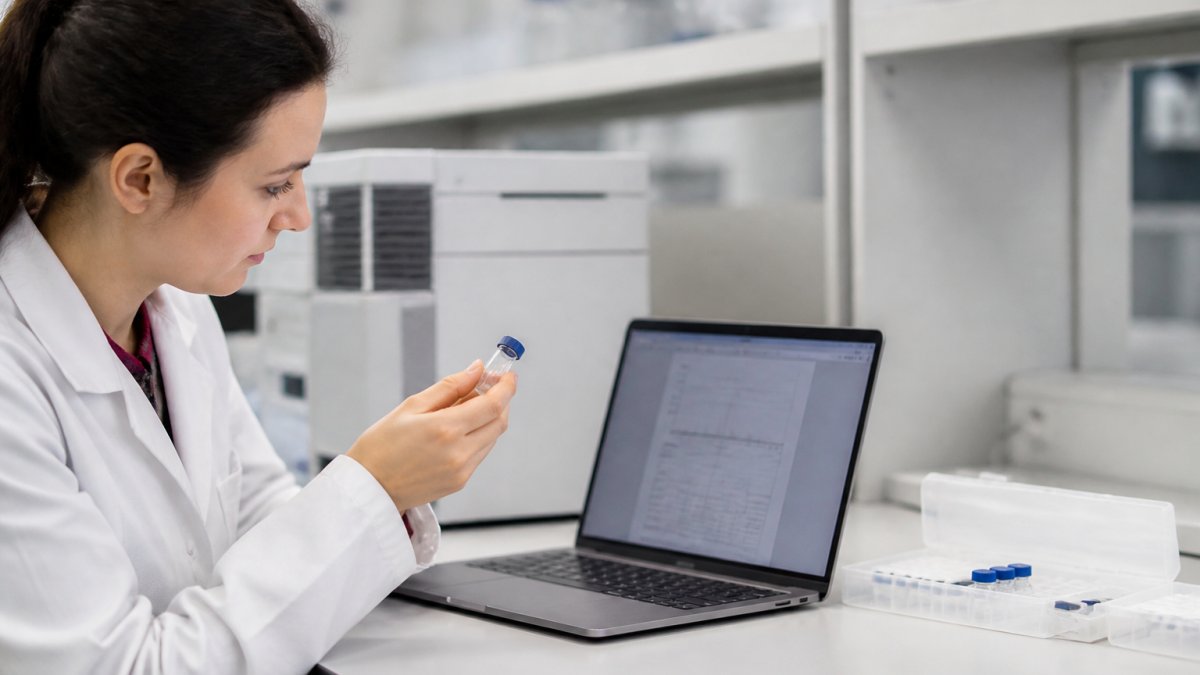
A peptide certificate of analysis should identify the compound, the batch, the analytical methods used, the results, and the laboratory that produced them. If any of those five elements is missing, the document is not doing its job.
Read it in this order:
- Compound and sequence. Confirm the amino acid sequence matches what you ordered, not just the product name.
- Batch or lot number. This must match the vial in your hand.
- Purity result and method. HPLC purity percentage is meaningless without the method stated.
- Identity confirmation. Mass spectrometry results should confirm the expected molecular weight.
- Testing laboratory. A named, accredited third party carries more weight than an in-house result.
- Date of analysis. An old COA on a current batch is a red flag.
A common mistake is accepting a generic COA that covers a product line rather than a single lot. Batch-specific documentation is the only kind that supports traceability later.
Research Peptides vs Therapeutic Peptides: Know What You're Buying
Research peptides and therapeutic peptides are not the same category, and the distinction governs what you can legally and ethically do with a purchase. Research peptides are sold for in-vitro laboratory study only.
In Australia, therapeutic goods are regulated by the Therapeutic Goods Administration, and the TGA guidance on therapeutic goods regulation sets out how products intended for human use are assessed.
Responsible procurement means three things. You buy from a supplier that states research-use-only status plainly. You keep the material inside a laboratory setting. And you never represent a research compound as suitable for human consumption.
Supplier Qualification: A Practical Checklist
Most buying guides stop at "buy from a reputable supplier", not a criterion a lab can audit. The checklist below turns the research-use-only distinction into questions you can put to a supplier and answers you can file.
Quality system
- Does the supplier publish a quality manual or quality policy, or at least describe its quality system in writing?
- Is there a named person or role responsible for quality, and a route to contact them?
- Are testing laboratories named, and can the supplier evidence their accreditation?
Change control
- If a synthesis route, supplier, or testing laboratory changes, how is that communicated to buyers?
- Does the COA record the method and instrument, so a method change is visible in the documentation?
- Can you request notification before a change that affects a compound you buy regularly?
Complaint handling and recalls
- Is there a written complaints procedure with a stated response time?
- Has the supplier ever recalled a batch, and how were affected buyers notified?
- What happens if a batch fails your own incoming testing, replacement, refund, or investigation?
Continuity of supply
- Can the same lot be reserved for a multi-month study?
- What is the stated lead time, and how is it measured, from payment, or from order confirmation?
- Is there a backup source for the same compound if the primary supplier runs out?
Risk Management for Laboratory Buyers
The research-use-only label shifts responsibility onto the buyer, so the buyer needs a risk file. A practical pattern most labs find workable:
- Qualify before you buy. Score each supplier against the checklist above and record the evidence.
- Test on receipt. Run your own identity and purity check on a sample from each new lot, and file the result alongside the supplier's COA.
- Segregate and label. Keep research-use-only material physically separate from any therapeutic or clinical material.
- Document the intended use. Record the study, protocol, and in-vitro context for each purchase.
- Review annually. Re-qualify suppliers on a set cycle, because quality systems, ownership, and testing arrangements change.
Research Peptide Storage After Delivery
Research peptide storage decisions start the moment a parcel arrives. Most lyophilised peptides are stable at cool, dry conditions for extended periods, but reconstituted material is far less forgiving and generally needs refrigeration, with many sequences better kept frozen.
Practical steps after delivery:
- Inspect the vial and packaging before signing for it, and photograph any damage
- Store lyophilised vials sealed, dry, and away from light until reconstitution
- Reconstitute with the appropriate solvent and follow the supplier's concentration guidance
Watch out: repeated freeze-thaw cycling is the most common way researchers quietly degrade a good batch. Aliquoting once, at the start, prevents it.
Request a Batch COA and Start Your Order with OptiPeps
Supplier selection comes down to evidence. A lab-grade peptide supplier should hand you the batch documentation before you ask, name the laboratory that ran the testing, and tell you exactly where the parcel ships from.
We hold stock domestically and verify every batch by HPLC-MS against a 99%+ purity standard. If you are weighing up the risks of buying elsewhere, our breakdown of the risks of unregulated peptide suppliers in Australia is worth reading first. When you are ready to source, our 9 checks when sourcing high purity laboratory peptides pairs with this guide, and you can browse 150+ research-grade peptides with same-day dispatch via Australia Post Express.
Frequently Asked Questions
How do labs choose a reliable peptide supplier?
Start with documentation, not price. Ask for a batch-specific certificate of analysis that names the testing laboratory, the analytical methods used (HPLC and mass spectrometry), and the measured purity. Confirm the supplier holds stock domestically so customs delays do not affect time-sensitive studies, and check whether they publish COAs. A shortlist of peptide suppliers should be ranked on verifiable evidence: identity confirmation, purity figures, batch traceability, dispatch times and replacement terms if a batch fails.
What should a certificate of analysis for research peptides include?
A useful peptide certificate of analysis links to one specific batch number and shows the amino acid sequence, molecular weight, HPLC purity percentage, mass spectrometry identity confirmation, appearance, and the date of testing. It should name the laboratory that performed the testing, whether in-house or third-party, and be signed or dated. If the COA is generic across a product rather than tied to a batch, treat it as marketing material. OptiPeps publishes batch-level COAs so you can match the document to the vial in your hand.
How can a laboratory verify peptide purity independently?
Request the raw HPLC chromatogram, not just a stated percentage, then compare the retention time and peak area against the expected sequence. Mass spectrometry confirms molecular identity, which purity figures alone cannot. Where a study is peer-reviewed or regulated, send a sample to an accredited analytical laboratory for confirmation. Keep the supplier's COA alongside your own results so reviewers can trace the chain of evidence. Independent verification is the only way to confirm that a supplier's claims hold for the batch you received.
What is the difference between research peptides and therapeutic peptides?
Research peptides are supplied for in-vitro laboratory work only and are not intended for human use. Therapeutic peptides are manufactured under GMP conditions for clinical or pharmaceutical applications, with regulatory oversight and validated processes. Research-grade material carries a research-use-only label, and that distinction matters for procurement, storage and compliance. If your work feeds into pharmaceutical development, confirm which category the supplier is actually providing, because documentation and quality systems differ substantially between the two.
How should research peptides be stored after delivery?
Follow the supplier's stated storage guidance for each batch, and aliquot to avoid repeated freeze-thaw cycles. Record the batch number and receipt date against each vial. Good research peptide storage keeps the purity stated on the COA intact for the life of the study, and it makes your records defensible if a result is ever questioned.
If your current supplier cannot produce a batch-specific COA on request, that is your answer. OptiPeps publishes batch-level certificates of analysis, verifies purity by HPLC-MS through accredited third-party laboratories, and dispatches same-day from domestic stock so your study timeline holds. Get started with OptiPeps and source research peptides you can document from vial to record.