Quick Summary
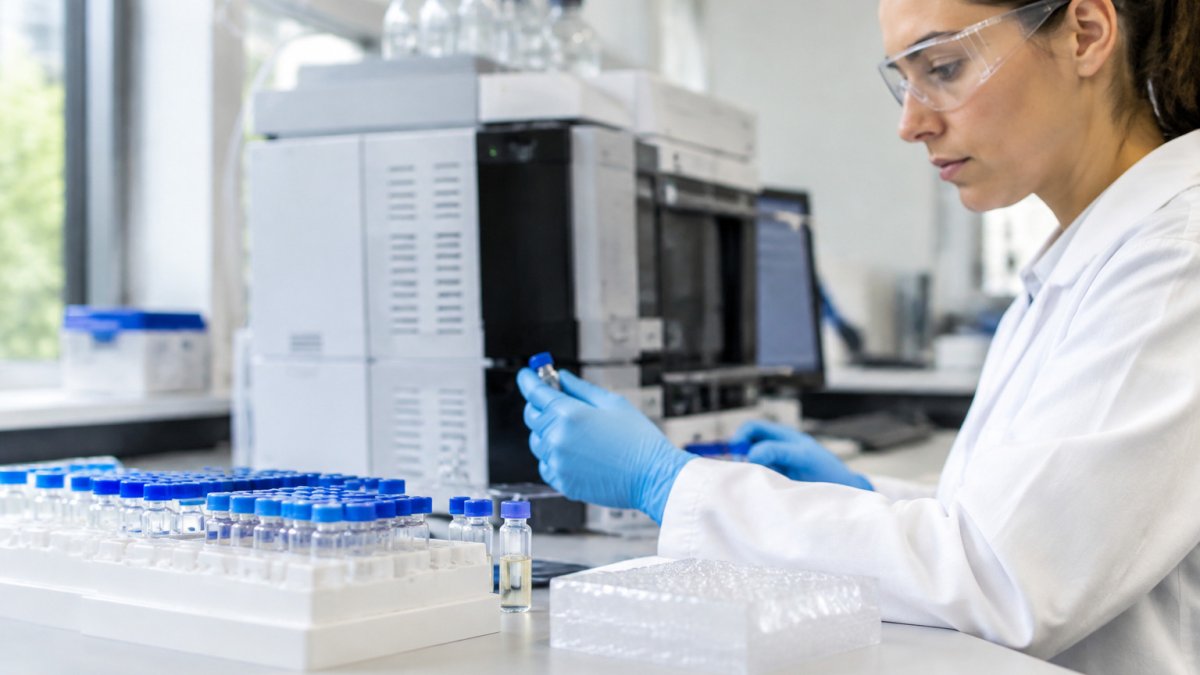
Residual solvent testing for peptides is usually done by static headspace gas chromatography, often with mass spectrometry detection to confirm each peak. Samples are sealed in a vial with a suitable diluent, equilibrated at a set temperature, and the vapour is injected for separation and quantification against matrix-matched calibration standards.
- Headspace GC is the most common method because the non-volatile peptide matrix is not injected.
- Equilibration temperature is commonly around 80 to 100 °C, held for 20 to 60 minutes.
- GC-MS identifies unexpected solvents, while FID suits routine quantification of known ones.
- Spiked recovery of 80 to 120% per solvent helps confirm the method is not under-reporting.
- Check that the certificate's LOQ sits well below the applicable ICH Q3C limit.
Table of Contents
- What Residual Solvents Are and How They Get Into Peptides
- Why Residual Solvent Testing Matters for Research Peptides
- Choosing a Method: Headspace Gas Chromatography for Residual Solvents
- GC-MS Residual Solvent Testing Step by Step
- Peptide Sample Preparation for GC
- Reading a Residual Solvent Certificate of Analysis
- Requesting Residual Solvent Testing for Your Next Peptide Order
- Frequently Asked Questions
What Residual Solvents Are and How They Get Into Peptides
Last Updated: November 8, 2026
Residual solvents are volatile chemicals left over from the manufacturing process. Trace amounts of residual solvent can affect how a peptide behaves in an assay.
Peptides are built step by step on a solid support, and each step uses solvents to wash, couple and cleave.
Residual solvents typically come from:
- Synthesis washes used between coupling cycles
- Cleavage cocktails used to release the peptide from resin
- Purification eluents used during preparative HPLC
Watch out: a clean-looking powder can still hold solvent. Visual inspection cannot tell you what is present, so you need an analytical test.
Why Residual Solvent Testing Matters for Research Peptides
Residual solvent levels can change how a peptide dissolves, how stable it is in solution, and how cells respond to it.
ICH Q3C is the international guideline that classifies residual solvents by toxicity and sets permitted daily exposure values for pharmaceutical products.
A good testing programme lets you:
- Confirm a batch is free of solvents you did not expect
- Compare batches from the same supplier over time
- Document material quality for peer review
Consider reviewing our guide on how to interpret a certificate of analysis for peptides to see how solvent results fit into the full report.
Choosing a Method: Headspace Gas Chromatography for Residual Solvents
Headspace gas chromatography (HS-GC) is the most common method for residual solvent analysis. It works well because most solvents are volatile enough to move into the gas phase above a heated sample, so the peptide matrix itself is not injected into the instrument.
For peptides, HS-GC is generally considered preferable to direct liquid injection, because non-volatile peptides can foul the column while the headspace approach keeps the instrument cleaner.
Static headspace sample introduction
In static headspace, a sealed vial is heated to a set temperature for a fixed time. Once the solvents partition into the gas phase, a sample of that gas is injected onto the column.
Key parameters to set and record:
- Equilibration temperature (commonly around 80 to 100 °C)
- Equilibration time (often 20 to 60 minutes)
- Vial fill volume, which controls the headspace ratio
- Diluent choice, typically DMSO or water, which should be chosen so the target solvents partition well
Flame ionisation versus mass spectrometry detection
Flame ionisation detection (FID) is strong and cost-effective for routine quantification of known solvents. It responds well to most organic compounds but cannot identify a peak on its own.
Mass spectrometry (GC-MS) identifies peaks by their mass spectra. It is the better choice when you need to confirm what a peak is, or when you suspect an unexpected solvent.
| Detector | Best for | Limitation |
|---|---|---|
| FID | Routine quantification of known solvents | Cannot identify unknown peaks |
| MS | Identification and confirmation | Higher running cost |
GC-MS Residual Solvent Testing Step by Step
Here is a practical workflow you can ask a testing laboratory to follow:
- Weigh the sample accurately into a headspace vial
- Add diluent and seal the vial immediately to prevent solvent loss
- Prepare calibration standards covering the solvents you expect
- Equilibrate the vials in the headspace sampler
- Inject the headspace gas onto the GC column
- Separate and detect peaks by GC-MS
- Identify each peak against a reference library
- Quantify against the calibration curve
- Compare results with ICH Q3C limits where relevant
Each step matters. A leaking vial or poor calibration will produce results that look plausible but are wrong.
Peptide Sample Preparation for GC
Sample preparation is where most residual solvent methods succeed or fail, and peptides are harder to prepare than small-molecule APIs. The reason is structural: a peptide has many hydrogen-bonding sites along the backbone and side chains, so it can adsorb volatile solvents and hold them tightly enough that they do not fully partition into the headspace during the equilibration window.
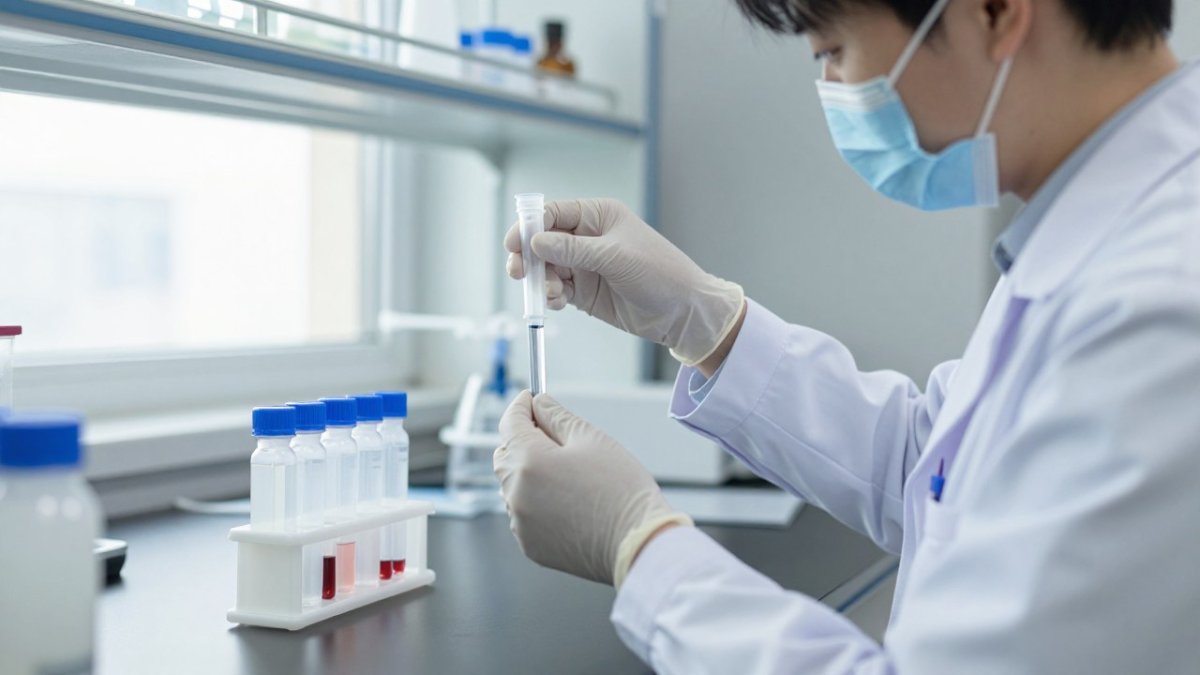
A defensible preparation starts with four decisions made before any vial is weighed.
1. Choose the diluent by matrix and solvent polarity
The diluent must dissolve or fully disperse the peptide so that trapped solvent is released, while still allowing the target solvents to partition into the headspace. Common choices and their trade-offs:
- Water suits hydrophilic peptides and polar solvents such as methanol and acetonitrile. It is a poor choice for very hydrophobic peptides, which may not wet out.
- Dimethyl sulfoxide (DMSO) dissolves a wide range of peptides and is a strong swelling solvent for the matrix, but it has a high boiling point and can suppress early-eluting peaks if the headspace temperature is set too low.
- Dimethylformamide (DMF) is similar to DMSO but is itself a Class 2 solvent under ICH Q3C, so it must be accounted for as a potential contaminant in blanks.
A common pattern is to screen two diluents during method development and pick the one that gives the higher recovery for the least volatile target solvent, not the one that gives the cleanest chromatogram.
2. Control sample mass and headspace ratio
The headspace ratio, the volume of gas above the sample divided by the sample volume, drives sensitivity and reproducibility. Typical practice is to weigh a modest sample into a sealed headspace vial and to control the headspace ratio so that sensitivity and reproducibility are maintained.
Record the exact mass and vial size on the worksheet. A method transferred between labs without matching the headspace ratio will not reproduce the same ppm result.
3. Seal and handle to prevent solvent loss
Volatile solvents escape the moment a vial is open. Weigh quickly, add diluent, and crimp immediately with a cap rated for the equilibration temperature. Septa matter: a standard silicone septum can bleed or leak at 90 °C, so use a PTFE-faced or high-temperature septum and run a septum blank with each batch.
Repeatedly opening a stock vial to weigh multiple aliquots lets the most volatile solvents escape, which can bias results low.
4. Build recovery into the method
Because peptides can retain solvent, a simple external calibration curve can under-report. Two practical controls address this:
- Matrix-matched calibration, prepare standards in blank peptide matrix so the calibration curve experiences the same partitioning behaviour as the sample.
- Spiked recovery, spike a known amount of each target solvent into a blank peptide sample and confirm recovery falls within an acceptable window (commonly 80 to 120% for each solvent at the reporting limit).
If recovery for a solvent is consistently low, the fix is usually a longer equilibration time, a higher equilibration temperature within the solvent's stability window, or a switch to a stronger swelling diluent, not a larger injection volume.
5. Run the blanks that catch contamination
A sound method includes blanks such as a method blank (diluent only), a septum or vial blank and a matrix blank. These catch the three most common false positives: carry-over from a previous high-concentration sample, septum bleed, and solvent residue in the diluent itself. A blank that shows a peak at the retention time of a target solvent invalidates the batch until the source is found.
Reading a Residual Solvent Certificate of Analysis
A residual solvent result is only useful if you can turn a measured concentration into a decision. That means reading the certificate at three levels: what was measured, how it was measured, and whether the number sits inside a defensible limit.
Level 1: What was measured
Look first at the solvent panel. A certificate that reports only one or two solvents is not evidence that the batch is clean, it is evidence that only those solvents were tested.
Results are usually reported in parts per million (ppm), which is equivalent to milligrams of solvent per kilogram of peptide (mg/kg). Confirm the units on the certificate; a result reported in mg/g is a thousand times higher than the same number in mg/kg.
Level 2: How it was measured
The certificate should state the method, the detector, and the reporting limits:
- Method and detector, headspace GC with FID or MS detection is the expected approach for volatile solvents. A direct-injection method may be acceptable for less volatile solvents but carries more matrix risk for peptides.
- Limit of detection (LOD) and limit of quantification (LOQ), a result reported as "not detected" is only meaningful if the LOQ is well below the relevant limit. A LOQ of 500 ppm cannot demonstrate compliance with a 50 ppm limit.
- Calibration and recovery, a well-documented certificate notes whether calibration was matrix-matched and whether spike recovery was performed.
Level 3: Interpreting against ICH Q3C limits
ICH Q3C classifies solvents into three groups and sets limits using a concentration limit in ppm and a permitted daily exposure (PDE) in milligrams per day. The ppm limit assumes a fixed daily dose of the drug substance, commonly 10 g per day for the concentration-limit calculation. If your actual daily exposure is lower than that assumption, the ppm limit is conservative; if it is higher, the ppm limit may not be protective and the PDE calculation is the better basis.
The PDE approach works like this: PDE (mg/day) divided by the daily dose of peptide (kg/day) gives the maximum permitted concentration in the peptide. For example, a Class 2 solvent with a PDE of 0.5 mg/day and a daily peptide dose of 0.01 kg/day gives a permitted concentration of 50 mg/kg, or 50 ppm.
Class 1 solvents (such as benzene and carbon tetrachloride) should not be present at all, and any detection warrants investigation. Class 2 solvents have published PDE values and should be limited.
Solvents without a listed limit
Not every solvent used in peptide manufacturing appears in ICH Q3C. When a solvent is unlisted, the certificate should say so explicitly and the supplier should be able to justify a limit, commonly by reference to a structurally similar listed solvent, a published toxicological threshold, or a internal specification. A certificate that silently omits an unlisted solvent is a documentation gap, not a clean result.
What a defensible certificate looks like
A certificate you can rely on will show:
- The full solvent panel, including solvents used in cleavage and purification
- The method, detector, and whether calibration was matrix-matched
- LOD and LOQ for each solvent, with the LOQ below the relevant limit
For a full walkthrough of how these results sit within the rest of a peptide certificate, see how to interpret a certificate of analysis for peptides.
Requesting Residual Solvent Testing for Your Next Peptide Order
When you order, ask for residual solvent results alongside purity data. Useful requests include:
- A residual solvent panel listing the solvents tested
- The analytical method and detector used
- The reporting limit for each solvent
If you need broader third-party verification, our guide on third-party peptide testing requirements explains what to ask suppliers for. You can also read about HPLC-MS testing for research peptides, which complements solvent analysis by confirming identity and purity.
Traceable batches make these checks meaningful, so match any results to the batch number on the vial you use.
Frequently Asked Questions
How are residual solvents tested in peptides?
Residual solvents in peptides are most often measured by static headspace gas chromatography. The peptide sample is dissolved in a suitable high-boiling solvent, sealed in a headspace vial and heated so volatile solvents move into the gas phase above the liquid. A small portion of that vapour is injected into the gas chromatograph, where solvents are separated and detected. Results are compared against the limits in ICH Q3C, and the amount of each solvent is reported in parts per million on the batch certificate.
Does an HPLC purity result show whether a peptide contains residual solvents?
No. HPLC purity measures non-volatile peptide-related impurities and the main peptide peak, typically at a UV wavelength. Most residual solvents are volatile and do not absorb UV light in a useful way, so they are not detected or quantified by HPLC. A high HPLC purity figure therefore says nothing about solvent content, and a separate headspace GC test is needed to address residual solvents. Ask for both results when a batch will be used in sensitive in-vitro work.
Which analytical method is used for residual solvent testing?
Headspace gas chromatography is the standard approach, and it is the method most laboratories use for residual solvents under ICH Q3C. Gas chromatography with mass spectrometry (GC-MS) is used when a solvent needs to be identified with confidence, or when an unexpected peak appears. Flame ionisation detection is common for routine quantification of known solvents. Method choice depends on the solvents expected from synthesis and purification, and on the peptide matrix.
What should a residual solvent certificate of analysis include?
A residual solvent certificate of analysis should name each solvent tested, the method used (for example, headspace GC with flame ionisation or GC-MS detection), the reporting limit, the measured result for each solvent and the applicable ICH Q3C limit. It should also state the batch or lot number, the testing laboratory and the date of analysis. Check that the report covers the solvents used in your peptide's synthesis and cleavage, not only a generic panel.