Last Updated: November 23, 2026
Quick Summary
Peptide analytical testing turnaround times typically run from two to ten business days from the moment a laboratory receives your sample, depending on the analytical panel requested and the service tier you book. The clock starts at laboratory receipt, after shipping and intake processing, not when you place your order. Report delivery typically follows one to two business days after final test completion.
- HPLC turnaround depends heavily on queue depth, so ask whether estimates are working days or calendar days.
- Requesting identity and purity testing together often runs faster than booking two separate tests.
- A sample rejected at intake for degradation, mislabelling or wrong buffer resets your entire business-day estimate.
- Business-day quotes exclude weekends and public holidays, so a five-day quote can stretch to nine calendar days.
- Expedited testing moves your sample to the front of the analysis queue but does not speed up courier transit or method development.
Table of Contents
- How long does peptide analytical testing take?
- Peptide HPLC testing turnaround time
- Peptide mass spectrometry testing time
- Peptide sample preparation for testing
- Peptide analytical testing report: what to expect and when
- Factors that affect peptide testing turnaround
- How to reduce avoidable delays in peptide testing
- Ordering verified peptides with published turnaround times
- Frequently Asked Questions
How long does peptide analytical testing take?
Peptide analytical testing turnaround times typically run from two to ten business days from the moment a laboratory receives your sample, depending on the analytical panel requested and the service tier you book. At OptiPeps, we treat turnaround as a published commitment rather than a vague estimate, because researchers planning in-vitro studies need to know when a certificate of analysis will land in their inbox.
The clock does not start when you place an order. It starts at laboratory receipt, after shipping and intake processing. That distinction matters more than most suppliers admit.
Below, we break down peptide analytical testing turnaround times test by test, explain what stretches them out, and show you how to avoid the delays that are entirely within your control. We will also cover what a realistic end-to-end timeline looks like when you factor in postage and sample submission.
Peptide HPLC testing turnaround time
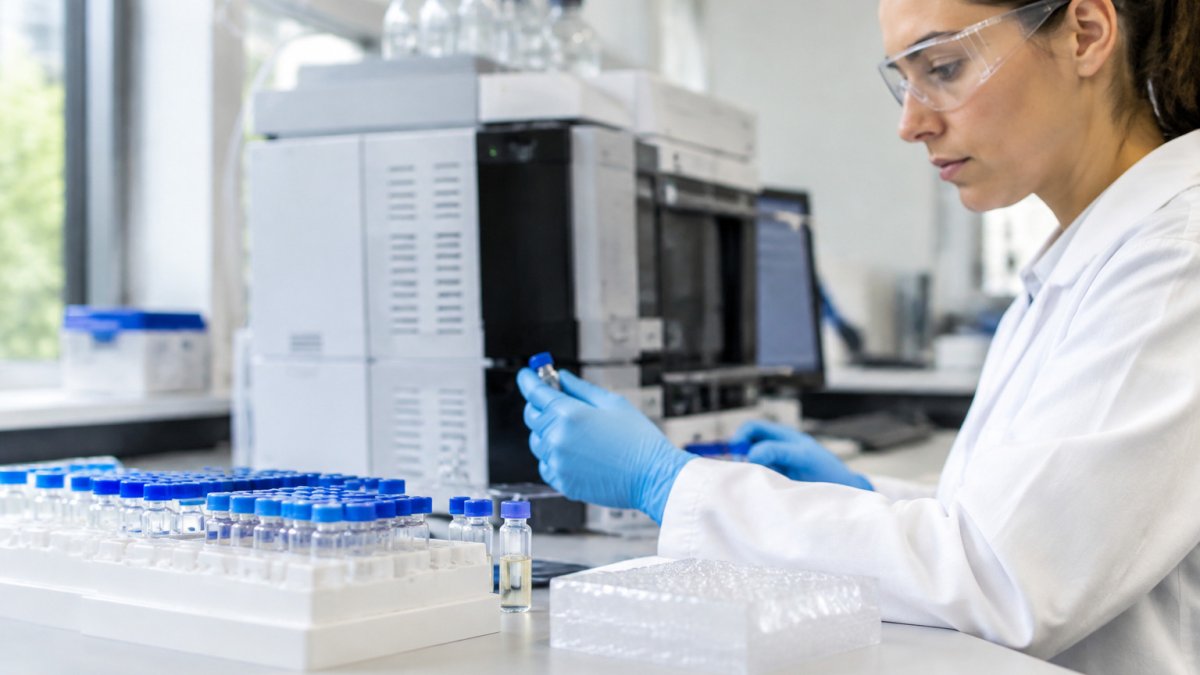
Peptide HPLC testing turnaround time depends on the laboratory, the sample, and current workload.
Routine testing at this tier covers the standard gradient method and a purity readout. Expedited testing may be available depending on laboratory capacity, and it depends on the sample arriving properly prepared.
What most guides miss is that HPLC turnaround depends heavily on queue depth. A testing laboratory running a full QC panel for a large client will push smaller submissions back.
For a deeper walkthrough of the method itself, our guide to HPLC-MS testing for research peptides explains how the analysis is run and what the output means.
Peptide mass spectrometry testing time
Peptide mass spectrometry testing time generally depends on the method and the sample, and mass spectrometry confirms molecular weight and sequence identity, so it answers a different question than purity alone.
LC-MS combines both, and when you request identity testing plus purity testing together, the laboratory can often run them in a single sequence. That is usually faster than booking two separate tests.
A common mistake is assuming a mass spectrometry result arrives the same day as the HPLC result. In practice, the mass spec data needs verification against the expected mass, and that review is where additional time creeps in.
Peptide sample preparation for testing
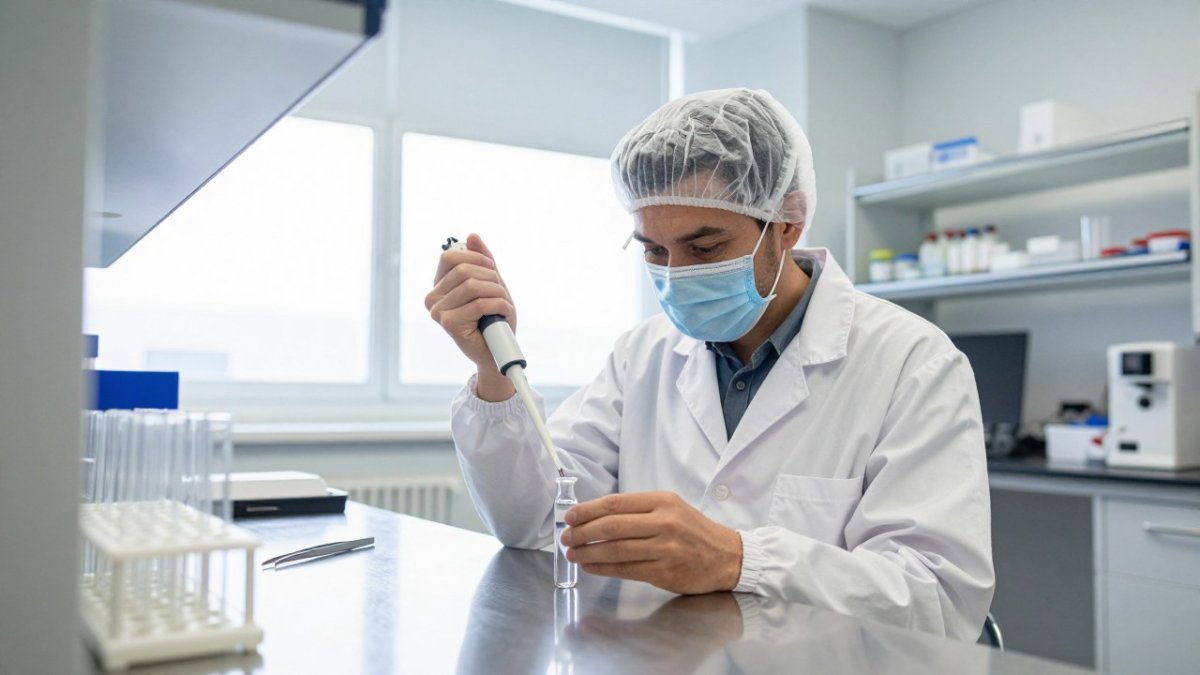
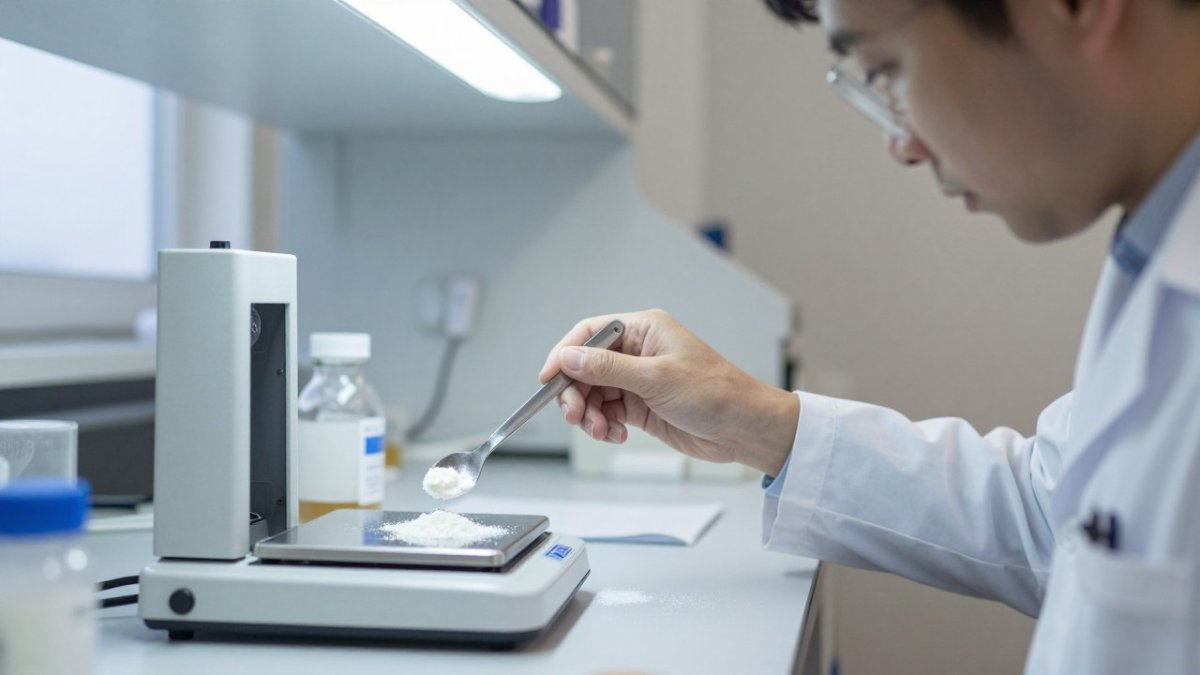
Sample preparation is the step researchers control, and it is where avoidable delays begin. A sample that arrives degraded, mislabelled, or in the wrong buffer can be rejected at intake, resetting your entire business-day estimate.
Follow these preparation steps to keep your submission moving:
- Confirm the sample type and concentration the laboratory requires before dispatch
- Label each vial with compound name, batch reference, and date
- Use the buffer system specified in the laboratory's submission guidance
- Store and ship at the temperature the laboratory recommends
- Include a completed sample submission form with every vial
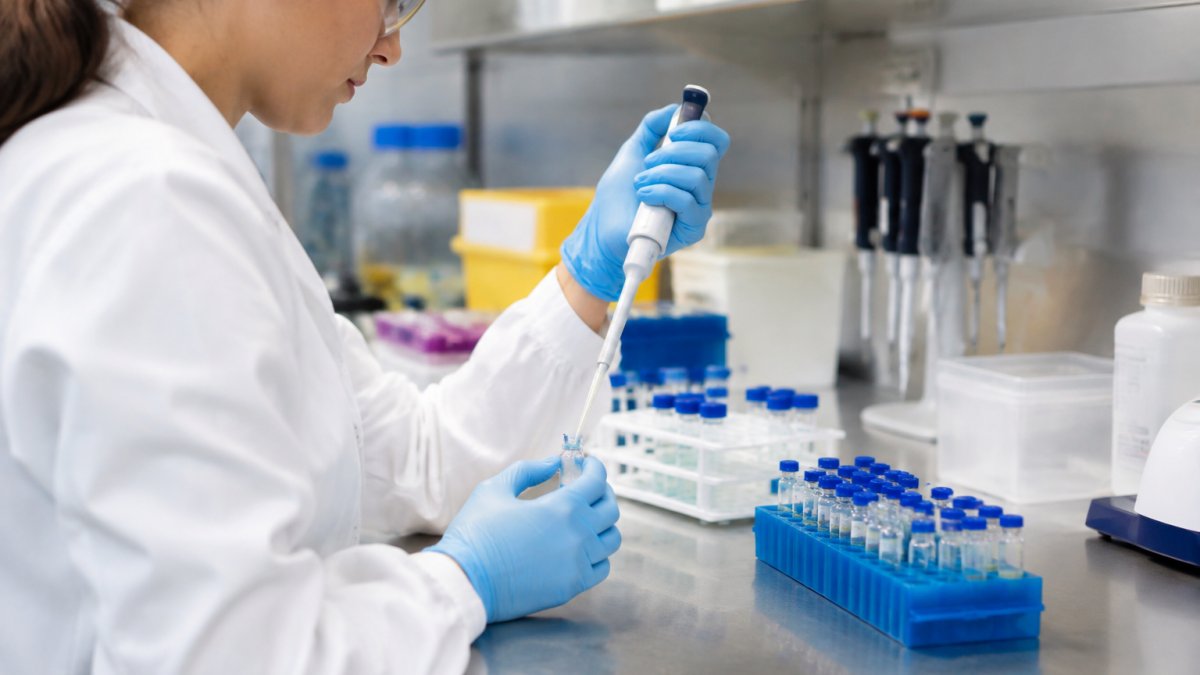
If you want a detailed, step-by-step protocol, our article on preparing peptides for HPLC-MS analysis covers the full preparation sequence and the handling details that protect sample integrity in transit.
Peptide analytical testing report: what to expect and when
A peptide analytical testing report arrives after test completion and result verification, and it should include the analytical method used, the purity figure, identity confirmation, and a certificate of analysis you can cite. Report delivery timing varies by laboratory, and some laboratories release results as each method completes.
What should the report actually contain? At minimum, look for the method name, the instrument platform, the purity percentage, the expected versus observed mass, and the batch reference. A COA that omits the method is difficult to defend in peer review.
If you are awaiting a report and want to know what third-party testing requirements apply, our guide to third party peptide testing requirements sets out what an independent laboratory should provide. When the certificate lands, our walkthrough on how to interpret a certificate of analysis for peptides helps you read each section without guesswork.
Factors that affect peptide testing turnaround
Most quoted peptide analytical testing turnaround times are not like-for-like, because laboratories disagree on when the clock starts and what it includes.
End points you will encounter. The clock may stop at raw data capture, at analyst sign-off, at quality review, or at report issue.
Weekends and public holidays. Business-day estimates exclude weekends and public holidays; calendar-day estimates do not. A five-business-day quote that spans a public holiday and a weekend can stretch to nine calendar days.
The full end-to-end path. A realistic timeline runs through dispatch, courier transit, delivery, accessioning, sample preparation, analysis, data review, report generation and report delivery. Each stage has its own common delays:
- Dispatch and transit: courier cut-off times, interstate transit, and any cold-chain packaging requirements. A Friday afternoon dispatch may not move until Monday.
- Delivery and accessioning: a sample that arrives after the laboratory's intake cut-off is logged the next business day. Incomplete submission forms stall accessioning until the laboratory can resolve the query with you.
- Sample preparation: buffer mismatch, insufficient quantity, or a sample that needs re-prep can push the sample back to the end of the queue.
- Analysis: instrument availability, queue depth, and method setup for non-standard compounds.
- Data review: a second-analyst check of the mass spectrometry data against the expected mass, and of the purity integration, before the report is released.
- Report delivery: typically one to two business days after final test completion, though some laboratories release results method by method.
Factors that move the estimate. Beyond the clock definition, the variables that most affect turnaround are:
- Analytical panel scope: a single reverse-phase purity run is faster than a full panel combining identity, purity, content and counter-ion analysis.
- Method complexity: forced degradation, stability protocols, and custom modifications such as non-standard amino acid substitutions require method development and add lead time.
- Queue depth: a laboratory running a large client's full QC panel will push smaller submissions back, so ask whether the estimate assumes an empty queue.
- Sample suitability: a sample that fails intake, needs re-prep, or requires a repeat injection resets the estimate.
- Result verification: data review before report delivery is non-negotiable and is a common hidden addition to advertised figures.
- Shipping and customs: for any sample crossing a border, clearance sits entirely outside the laboratory's control.
Watch out: a laboratory quoting three business days from receipt is not the same as three days from your order. Add shipping and accessioning, and the realistic figure is longer. Ask any supplier to state both endpoints explicitly, in writing, before you commit.
How to reduce avoidable delays in peptide testing
You can shorten your real-world timeline without paying for urgent testing by removing the friction points that cause resubmission.
Preparation checklist before dispatch:
- Confirm the sample type, concentration and minimum quantity the laboratory requires, and check you have enough for a repeat injection if the first run fails.
- Confirm the buffer system and solvent match the laboratory's method requirements; a mismatched buffer can force a re-prep and a fresh queue position.
- Label each vial with compound name, batch reference, concentration and date, and keep the labelling consistent across vials so result verification does not stall on a query.
- Complete the sample submission form in full, including the expected molecular weight and any known modifications, because an incomplete form is the most common reason a sample sits in intake limbo.
- Package to the laboratory's temperature and packaging guidance, and include absorbent material and a sealed secondary container where required.
- Ship early in the week and before the courier cut-off, so the sample reaches accessioning rather than sitting in transit over a weekend.
- Keep the tracking number and share it with the laboratory so intake can be matched to your submission.
- Respond promptly to any laboratory query about the submission, because accessioning pauses until the query is resolved.
Choosing between routine and rush service. Whether rush service is worth the added cost depends on whether a result gates a time-sensitive decision. Use the criteria below:
| Situation | Service tier | Why |
|---|---|---|
| Result gates a live experiment or a release decision | Expedited testing | Compresses the queue window and prioritises review |
| Routine batch confirmation with no deadline | Standard service | Lower cost and a predictable timeline |
| Novel modification or custom protocol | Routine, planned early | Method setup needs lead time that rush cannot remove |
| Resubmission after a rejected sample | Rush service | Recovers lost calendar days |
What rush service does and does not accelerate. Expedited testing typically moves your sample to the front of the analysis queue and prioritises data review, which can compress the analysis and review stages.
Interpreting turnaround claims and report scope. A fast preliminary result is not the same as a verified report.
Watch out: paying for rush service on a sample with an incomplete submission form or a mismatched buffer will not recover the lost time, because the delay happens before the analysis queue is reached.
Ordering verified peptides with published turnaround times
Ordering verified peptides with published turnaround times removes the guesswork from your planning, because you can schedule experiments against a stated commitment rather than a hopeful estimate.
OptiPeps holds stock domestically and dispatches from its Melbourne-based facility. Batch-level Certificates of Analysis are available, and no card surcharges apply to Australian bank transfers.
Before you commit to any supplier, it pays to know what to ask. Our guide to the five questions to ask before ordering research peptides gives you a short checklist for vetting turnaround claims and testing transparency.
Time-sensitive research deserves a supply chain that respects your schedule. OptiPeps publishes batch-level Certificates of Analysis, holds stock domestically for same-day dispatch, and ships via Australia Post Express so your samples reach your bench without customs friction.
Frequently Asked Questions
How long does peptide analytical testing take?
Peptide analytical testing turnaround depends on the analytical panel requested and the laboratory's current workload, and is generally measured from the date the laboratory receives your sample. Confirm current turnaround expectations with OptiPeps or the testing laboratory. The clock starts at sample receipt, not dispatch, so shipping time and intake processing add to the total. Expedited or rush services can shorten the analytical phase but rarely the intake queue.
How long do HPLC peptide purity tests take?
Peptide HPLC testing turnaround time depends on the laboratory and the sample. Complex sequences, unusual modifications or samples that need re-running can extend the timeline, so confirm expected timing with OptiPeps or the testing laboratory.
Does mass spectrometry add time to peptide testing?
Yes. Peptide mass spectrometry testing adds time on top of HPLC, because the sample is prepared separately and the data is interpreted against the expected molecular weight. LC-MS combines separation and detection in one run, which can reduce the total compared with running HPLC and MS as separate workflows. If you need identity confirmation for a certificate of analysis, budget for the combined LC-MS timeline rather than the HPLC time alone.
What can delay a peptide testing report?
The most common delays sit outside the analytical method itself: shipping time, incomplete sample submission forms, samples that arrive below the required amount, and intake queues at the laboratory. Results that fall outside specification trigger re-testing, which adds days. To avoid this, confirm the sample receipt date, supply the sequence and expected mass, and ask whether the quoted turnaround is measured in business days from receipt. A peptide analytical testing report should state the receipt date, method and result verification step so you can see where time was spent.